
Extension Foundation Online Campus
Search results: 540

Veterans Agriculture Education and Assistance Program (VAEAP) in the Southwest
This VAEAP orientation video will ensure you are aware of the requirements of the program and will also cover the last paperwork you need to fill out and return. After the orientation video, please fill out and sign the last three pages of the Participant Protocols.
Once your paperwork is submitted, you'll be sent a code so that you can access all of the VAEAP curriculum.
- Teacher: Vaeaps Box
- Teacher: Jody Dean
- Teacher: Don Dinwiddie
- Teacher: Robert Masson
Veterans Agricultural Education and Apprenticeship Program in the Southwest
Course Name: Transplant Production
Presenter: Ursula Schuch, Ph.D., School of Plant Sciences, University of Arizona
The course contains video, requiring a computer that can play audio and video.
Contact and technical support: Robert Masson, masson@arizona.edu.
- Teacher: Vaeaps Box
- Teacher: Jody Dean
- Teacher: Don Dinwiddie
- Teacher: Robert Masson
Veterans Agricultural Education and Apprenticeship Program in the Southwest
Course Name: Asexual Plant Propagation
Presenter: Ursula Schuch, Ph.D., School of Plant Sciences, University of Arizona
The course contains video, requiring a computer that can play audio and video.
Contact and technical support: Robert Masson, masson@arizona.edu.
- Teacher: Vaeaps Box
- Teacher: Jody Dean
- Teacher: Don Dinwiddie
- Teacher: Robert Masson
Course Name: VAEAP - Hoop House Build at AVG
This video shows the construction of a Hoop House kit at the Avra Valley Growers. Thank you to Bruce Laird for hosting VAEAP participants
The course contains video so it requires a computer that can play audio and video.
- Teacher: Vaeaps Box
- Teacher: Jody Dean
- Teacher: Don Dinwiddie
- Teacher: Robert Masson
Course Name: VAEAP-Introduction to Careers and Business Opportunities in Agriculture and Horticulture
This is the required class for the Veterans Ag Education and Apprenticeship Program. We go over the different career possibilities in agriculture and other green industries. If you have any questions, please contact the professors. Dr. Ursula Schuch: uschuch@arizona.edu Trent Teegerstrom: tteegers@ag.arizona.edu Dr. Edward Franklin: uafrank0@arizona.edu
The course contains video so it requires a computer that can play audio and video.
- Teacher: Vaeaps Box
- Teacher: Jody Dean
- Teacher: Don Dinwiddie
- Teacher: Robert Masson
Veterans Agricultural Education and Apprenticeship Program in the Southwest
Course Name: Introduction to Plant Propagation
Presenter: Ursula Schuch, Ph.D., School of Plant Sciences, University of Arizona
The course contains video, requiring a computer that can play audio and video.
Contact and technical support: Robert Masson, masson@arizona.edu.
- Teacher: Vaeaps Box
- Teacher: Don Dinwiddie
- Teacher: Robert Masson
Veterans Agricultural Education and Apprenticeship Program in the Southwest
Course Name: Sexual Plant Propagation
Presenter: Ursula Schuch, Ph.D., School of Plant Sciences, University of Arizona
The course contains video, requiring a computer that can play audio and video.
Contact and technical support: Robert Masson, masson@arizona.edu.
- Teacher: Vaeaps Box
- Teacher: Jody Dean
- Teacher: Don Dinwiddie
- Teacher: Robert Masson
Veterans Agricultural Education and Apprenticeship Program in the Southwest
Course Name: Vegetable crop production methods for Yuma
Presented by: Robert Masson, UArizona, Yuma County Cooperative Extension, Asst. Agricultural Agent
Course Overview:
Robert Masson, UArizona, Yuma County Cooperative Extension Asst. Agricultural Agent. Robert will discuss U.S. vegetable production of the 20th and 21st century as well as modern farming considerations. He will also look at Yuma production methods such as Tillage, Seeding and Transplanting, Fertilizers and crop Nutrition, and Irrigation methods.
The course contains video so it requires a computer that can play audio and video.
Contact and technical support: Robert Masson, masson@arizona.edu.
- Teacher: Vaeaps Box
- Teacher: Jody Dean
- Teacher: Don Dinwiddie
- Teacher: Robert Masson
Are you curious about how to start growing your own vegetables? Do you have gaps in your vegetable gardening knowledge that might be holding you back? Would you like to become familiar with world-class UCANR resources that will help you solve your gardening problems?
If so, please join us, as we guide a series of discussions on topics that will help answer your questions and give you the skills and confidence to grow vegetables successfully. Discover the value of learning about UCANR's science resources.
This Vegetable Gardening for Beginners course covers the basic principles of growing your own vegetables. After you complete the course by attending all four days of instruction, you receive a UCMGCC certificate as a Growing Gardener in Vegetable Gardening.
TOPICS:
* Evaluating your site
* Building healthy living soil
* Selecting and planting your vegetables
* Harnessing the power of pollinators and beneficial insects
* Efficiently irrigating your garden
* Using UC best practices and resources
This course is ideal for beginners. Lessons cover the basic principles of gardening and include guidelines for Contra Costa County’s unique growing conditions. Participants who complete the course by attending all four days of instruction will become UC certified Growing Gardeners In Vegetable Gardening

- Class Support: Growing Gardeners Class Support
- Class Support: Ann Ramirez
The audience for this course includes Vermont custom manure applicator business owners and employees and interested ag service providers.
As a result of taking this course, participants will learn about Vermont’s Required Agricultural Practices (RAPs), regulatory requirements for custom manure applicators in Vermont, nutrient management plans as they relate to custom applicators, and record-keeping requirements. This course includes videos which requires a good internet connection.
For more information, suggestions, or feedback: Lindsey Ruhl, University of Vermont Extension, lindsey.ruhl@uvm.edu.
- Teacher: Susan Brouillette
- Teacher: Lindsey Ruhl
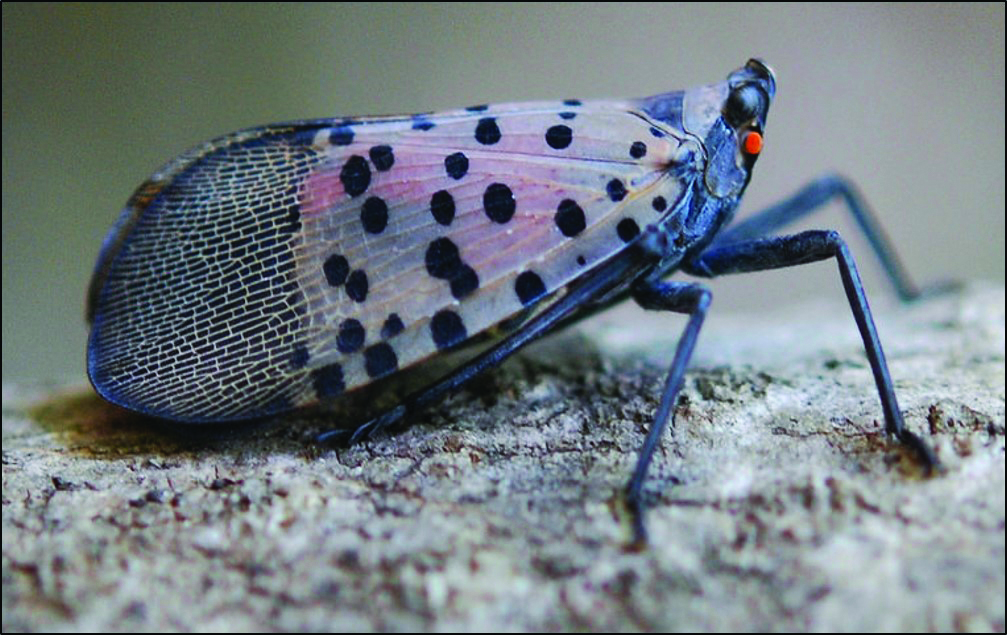
Vermont's Forest Pest First Detectors Program
Help protect Vermont’s forests against invasive forest pests. Learn to detect, report, and educate others on pests such as hemlock woolly adelgid, emerald ash borer and spotted lanternfly.
Who Should Join?
- Graduates of UVM Extension's Master Gardener program.
- Anyone interested in trees and forests.
- Beginners welcome; no prior knowledge required.
- Forest Pest First Detectors looking for a refresher.
By the end of this course, you will be able to:
- Understand and explain the threat of introduced tree pests to forest health.
- Identify the host trees, signs and symptoms, and look-alikes of key forest insects and pathogens.
- Use resources like VTinvasives.org for information.
- Report suspected pest infestations.
- Volunteer to help in your community (optional)
Course Dates: March 8 – May 2, 2026
This free, course features 10 sections with videos,
articles, podcasts, and self-assessment exercises.
Questions?
Contact Ginger at ginger.nickerson@uvm.edu or 802-656-4831
Note: Continuing education credits are not available for this course.
- Teacher: Gwen Kozlowski
- Teacher: Ginger Nickerson
- This course is for anyone wishing a Vermont* 3B Turf pesticide applicator license: landscapers, golf course supervisors and employees, sport field groundskeepers, pest control operators, government or municipal employees, university employees, etc.
- This course is not intended as a substitute for study of the manual and inserts.
- This course does not provide recertification credit. Please see related Vermont Pesticide Safety Education course offerings for recertification credits.
For more information please contact Sarah Kingsley-Richards at sarah.kingsley@uvm.edu.
Presented by University of Vermont Extension Pesticide Safety Education Program and the Vermont Agency of Agriculture, Food & Markets. [Published 2024]
*NOTE: Anyone using the Category 3 Ornamental and Turf manual for other state pesticide applicator certification may also use this review. Please check with your state certifying agency for local laws, regulations, and additional required study materials.
The fee for this course is $40. To purchase and enroll in the course, click the following button:
- Teacher: Sarah Kingsley-Richards
- This course is for anyone wishing a Vermont* 7A General (Structural) Pest Control pesticide applicator license: pest control operators, government or municipal employees, university employees, etc.
- This course is not intended as a substitute for study of the manual and inserts (see list below).
- This course does not provide recertification credit. Please see related Vermont Pesticide Safety Education course offerings for recertification credits.
For more information please contact Sarah Kingsley-Richards at sarah.kingsley@uvm.edu.
Presented by University of Vermont Extension Pesticide Safety Education Program and the Vermont Agency of Agriculture, Food & Markets. [Published 2020]
*NOTE: Anyone using the Category 7a Subcategory Structural and Rodent manual for other state pesticide applicator certification may also use this review. Please check with your state certifying agency for local laws, regulations, and additional required study materials.
The fee for this course is $40. To purchase and enroll in the course, click the following button:
- Teacher: Sarah Kingsley-Richards
- This course is for anyone wishing a Vermont* 7C Food Processing pesticide applicator license: pest control operators and employees in bakeries, dairy product processing, canning and frozen food packing, confection manufacturing, meat product processing plants, restaurant kitchens, cafeteria kitchens, food hubs, etc.
- This course is not intended as a substitute for study of the manual and inserts (see list below).
- This course does not provide recertification credit. Please see related Vermont Pesticide Safety Education course offerings for recertification credits.
For more information please contact Sarah Kingsley-Richards at sarah.kingsley@uvm.edu.
Presented by University of Vermont Extension Pesticide Safety Education Program and the Vermont Agency of Agriculture, Food & Markets. [Published 2024]
*NOTE: Anyone using the Category 7f Subcategory Food Processing manual for other state pesticide applicator certification may also use this review. Please check with your state certifying agency for local laws, regulations, and additional required study materials.The fee for this course is $40. To purchase and enroll in the course, click the following button:
- Teacher: Sarah Kingsley-Richards
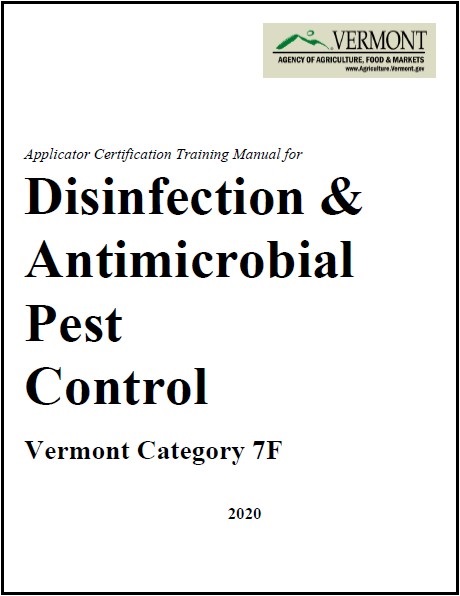
- This course is for anyone wishing a Vermont* 7F Disinfection & Antimicrobial Pest Control pesticide applicator license (required to perform disinfecting or sanitizing services to the property of others using an EPA registered pesticide): pest control operators, government or municipal employees, university employees, etc.
- This course is not intended as a substitute for study of the manual and inserts (see list below).
- This course does not provide recertification credit. Please see related Vermont Pesticide Safety Education course offerings for recertification credits.
For more information please contact Sarah Kingsley-Richards at sarah.kingsley@uvm.edu.
Presented by University of Vermont Extension Pesticide Safety Education Program and the Vermont Agency of Agriculture, Food & Markets. [Published 2022]
*NOTE: Anyone using the Vermont Category 7F Disinfection & Antimicrobial Pest Contro manual for other state pesticide applicator certification may also use this review. Please check with your state certifying agency for local laws, regulations, and additional required study materials.
The fee for this course is $30. To purchase and enroll in the course, click the following button:
- Teacher: Sarah Kingsley-Richards
Anyone in the state of Vermont who uses, supervises, recommends, or
sells pesticides and/or trains Worker Protection Standard
handlers/workers may be required to take and pass the CORE exam and all
appropriate category exams to become certified. Certification is
administered by the Vermont Agency of Agriculture, Food & Markets to
ensure that pesticides are used in a proper and legal manner.
- This course is for anyone wishing a Vermont pesticide applicator license: nursery employees, landscapers, farmers, agricultural employers (WPS compliance), garden center employees, pest control operators, government or municipal employees, university employees, etc.
- This course is not intended as a substitute for study of the CORE manual and inserts.
- This course does not provide recertification credit. Please see related Vermont Pesticide Safety Education course offerings for recertification credits.
For more information please contact Sarah Kingsley-Richards at sarah.kingsley@uvm.edu.
Presented by University of Vermont Extension Pesticide Safety Education Program and the Vermont Agency of Agriculture, Food & Markets. [Published 2018]
NOTE: Anyone using the Northeast CORE Manual, 3rd Edition, for other state pesticide applicator certification may also use this review. Vermont-specific laws and regulations do not apply to other state certification; Vermont-specific information may be skipped over in this review. Please check with your state certifying agency for local laws, regulations, and additional required study materials.
The fee for this course is $40. To purchase and enroll in this course, click the following link:
- Teacher: Sarah Kingsley-Richards
As a result of taking this course, participants will learn about Vermont’s Required Agricultural Practices (RAPs), how to take a soil sample and interpret results, how to take a manure sample and interpret results, field by field nutrient management planning, record-keeping requirements, and how to calibrate manure spreaders. This course includes videos, resources, references, and worksheets.
For more information or to enroll contact: Lindsey Ruhl, University of Vermont Extension, lindsey.ruhl@uvm.edu.
This course has been made possible with generous funding from the Vermont Agency of Agricultural Food and Markets Clean Water Initiative Grant, "Innovative Training Tools to Help Small Farm Operations Comply with Required Agricultural Practices," grant #02200-ARM-CWF-2017-UVM.
- Teacher: Lindsey Ruhl
The WASBA Master Beekeeper Course is run by Washington State University and the Washington State Beekeepers Association (WASBA). Students are admitted after submitting applications to WASBA and finishing a screening process. This course covers beekeeping management practices, advanced honeybee biology, scientific methods for investigating bee related issues, and more!
Please contact WASBA at wasbaeducation@gmail.com for information.
- Teacher: Priyadarshini Chakrabarti Basu
Washington State 4-H Volunteer Orientation is an online course designed to orient new 4-H volunteers. Participants will learn:
- Volunteer Roles & Relationships
- Positive Youth Development
- Youth/Adult Partnerships
- Safe & Inclusive Environments
- Learn by Doing
For more information contact Jana S. Ferris, Washington State University, ferrisj@wsu.edu
- Teacher: Jana Ferris
The audience for this course is: Crop producers, handlers, and anyone interested in food safety
By taking this course, students will learn:
Basic microbiology concepts, where pathogens come from and be able to explain where pathogens can be found and how they can contaminate fresh produce.
For more information or to enroll please contact:
- Teacher: Paul Goeringer
- Teacher: Jill Goedeken
 The Weather Ready Farms Designation Program from the University of Nebraska Extension is an agricultural education program aimed at offering farmers new strategies and technologies to prepare for extreme weather events and climate variation.
Farmers that participate in our two-year program learn about conservation, natural resources management, improving soil health, disaster preparedness, farm financial management, climate-smart agriculture, precision agriculture, and many more topics. WRF participants use their farm resiliency education to implement new weather-ready agriculture practices on their farm.
To learn more go to: https://weather-ready.unl.edu/
If you are interested in starting a Weather Ready Farms program at your extension site, contact Nathan Mueller at nathan.mueller@unl.edu.
- Extension Educator: Candace Hulbert
This course guides participants through a process to realistically evaluate their goals and resources and provides the tools to evaluate the feasibility of starting a sustainable small acreage enterprise in Idaho. Course topics include whole farm planning, resource evaluation, site-appropriate production practices, market analysis and enterprise budgets. Upon course completion, project participants will have the knowledge and skills to engage in whole farm planning.Note:
Course enrollment is limited to participants in Idaho and Washington.
For more information or to enroll please contact Kate Wood, University of Idaho, at cultivatingsuccess@uidaho.edu.
- Instructor: Colette DePhelps
- Instructor: Kate Wood
Este curso proporciona la información necesaria para capacitar a quienes capacitarán a trabajadores agrícolas y manipuladores de pesticidas bajo la Ley Nacional de Protección al Trabajador (WPS, por sus siglas en inglés) de la EPA de EUA. Éste lo guiará a través de los procedimientos necesarios para proporcionar información requerida a los trabajadores agrícolas y manipuladores de pesticidas sobre cómo evitar la exposición a pesticidas y residuos de pesticidas.
La finalización de este curso lo certifica como un capacitador WPS calificado de trabajadores agrícolas y manipuladores de pesticidas en los Estados Unidos continentales, Alaska, Hawái, Puerto Rico, Guam y las Islas Vírgenes de los EE. UU. Antes de inscribirse, debe consultar con la agencia reguladora de pesticidas de su estado o tribu para conocer los posibles requisitos adicionales. Nota: este curso no cumplirá los requisitos de capacitación del capacitador en California para el Departamento de Regulación de Pesticidas de California. Y no cumplirá los requisitos de capacitación del capacitador en Arizona para el Departamento de Agricultura de Arizona. Debe contactarlos directamente para obtener una lista de cursos que lo harán.
Cada año, se publicará una nueva oferta del curso actual. Esto permitirá a los estudiantes retomar el curso según lo necesiten los empleadores y las agencias reguladoras. La oferta del año anterior estará disponible en el perfil del estudiante en caso de que necesite acceder a un certificado anterior. Tenga en cuenta que el contenido será idéntico cada año, a menos que se indique lo contrario que hubo una revisión del curso.
Computadora: Se recomienda: Mac OXC 10.9 o superior o una PC con Windows 7 o superior.
Navegador: Se recomienda firmemente el uso de: Google Chrome o Mozilla Firefox. Se desalienta rotundamente: otros navegadores diferentes a los mencionados arriba. Otros navegadores pudieran funcionar pero hemos experimentado problemas de desempeño durante pruebas (e.g., Internet Explorer, Microsoft Edge, etc.) eXtension no puede responder a las consultas de solución de problemas si los clientes están utilizando un navegador no recomendado.
Audio: Este curso contiene narración en audio. Para escuchar la narración, su computadora necesitará tener bocinas de audio internas o conectados. Usted también puede escuchar el audio a través de audífonos.
Para mas información, contacte: PERCsupport@ucdavis.edu.
Si tiene preguntas sobre soporte técnico (p. ej., inscripción, pagos, etc.), comuníquese con cataloghelp@extension.org.
Para inscribirse, vea abajo.
Lista de Verificación de Finalización del Curso
- Completar los módulos en orden (12)
- Completar las Verificaciones del Conocimiento para cada módulo (12)
- Tomar el Examen Final (debe de obtener un 70% para aprobar)
- Completar la evaluación
- Descargar el certificado
- Enviar el certificado. Usted es responsable de identificar y enviar su certificado a las entidades apropiadas.
La tarifa de inscripción para este curso es $75. Para comprar e inscribirse en este curso haga clic aquí:
Política de No Reembolso - A menos que no pueda obtener acceso a el curso usando uno de los sistemas operativos o navegadores requeridos, PERC no emitirá un reembolso. Si tiene alguna pregunta sobre nuestra Política de No Reembolso, por favor contáctenos en percsupport@ucdavis.edu.
- Teacher: Suzanne Forsyth
- Teacher: Christian Gella
- Teacher: Hannah Moore
Este curso ya no está abierto para inscripciones.
Este curso en línea es la Capacitación en Línea para Capacitadores de Trabajadores Agrícolas y Manipuladores de Pesticidas de la Ley Nacional de Protección al Trabajador. El curso fue desarrollado por el Centro de Recursos de Colaboración para la Educación sobre Pesticidas (PERC, por sus siglas en inglés) a través de un acuerdo cooperativo (acuerdo #X8-83616301) entre la Oficina de Programas de Pesticidas de la Agencia de Protección Ambiental de EUA (EPA, por sus siglas en ingles) y el Programa de Extensión de la Universidad de California Davis, en colaboración con la Universidad Estatal de Oregón. Numero de aprobación EPA WPS TTT W/H 00030.La finalización de este curso lo certifica como un capacitador WPS calificado de trabajadores agrícolas y manipuladores de pesticidas en los Estados Unidos continentales, Alaska, Hawái, Puerto Rico, Guam y las Islas Vírgenes de los EE. UU. Antes de inscribirse, debe consultar con la agencia reguladora de pesticidas de su estado o tribu para conocer los posibles requisitos adicionales. Nota: este curso no cumplirá los requisitos de capacitación del capacitador en California para el Departamento de Regulación de Pesticidas de California. Debe contactarlos directamente para obtener una lista de cursos que lo harán.
Cada año, se publicará una nueva oferta del
curso actual. Esto permitirá a los estudiantes retomar el curso según lo
necesiten los empleadores y las agencias reguladoras. La oferta del año anterior estará disponible
en el perfil del estudiante en caso de que necesite acceder a un certificado
anterior. Tenga en cuenta que el contenido será idéntico cada año, a menos que
se indique lo contrario que hubo una revisión del curso.
Computadora: Se recomienda: Mac OXC 10.9 o superior o una PC con Windows 7 o superior.
Navegador: Se recomienda firmemente el uso de: Google Chrome o Mozilla Firefox. Se desalienta rotundamente: otros navegadores diferentes a los mencionados arriba. Otros navegadores pudieran funcionar pero hemos experimentado problemas de desempeño durante pruebas (e.g., Internet Explorer, Microsoft Edge, etc.) eXtension no puede responder a las consultas de solución de problemas si los clientes están utilizando un navegador no recomendado.
Audio: Este curso contiene narración en audio. Para escuchar la narración, su computadora necesitará tener bocinas de audio internas o conectados. Usted también puede escuchar el audio a través de audífonos.
Para mas información, contacte: PERCsupport@ucdavis.edu.
Si tiene preguntas sobre soporte técnico (p. ej., inscripción, pagos, etc.), comuníquese con cataloghelp@extension.org.
Para
inscribirse, vea abajo.
Lista de Verificación de Finalización del Curso
- Completar los módulos en orden (12)
- Completar las Verificaciones del Conocimiento para cada módulo (12)
- Tomar el Examen Final (debe de obtener un 70% para aprobar)
- Completar la evaluación
- Descargar el certificado
- Enviar el certificado. Usted es responsable de identificar y enviar su certificado a las entidades apropiadas.
Política de No Reembolso - A menos que no pueda obtener acceso a el curso usando uno de los sistemas operativos o navegadores requeridos, PERC no emitirá un reembolso. Si tiene alguna pregunta sobre nuestra Política de No Reembolso, por favor contáctenos en percsupport@ucdavis.edu.
- Teacher: Suzanne Forsyth
- Teacher: Hannah Moore
Este curso ya no está abierto para inscripciones.
Este curso en línea es la Capacitación en Línea para Capacitadores de Trabajadores Agrícolas y Manipuladores de Pesticidas de la Ley Nacional de Protección al Trabajador. El curso fue desarrollado por el Centro de Recursos de Colaboración para la Educación sobre Pesticidas (PERC, por sus siglas en inglés) a través de un acuerdo cooperativo (acuerdo #X8-83616301) entre la Oficina de Programas de Pesticidas de la Agencia de Protección Ambiental de EUA (EPA, por sus siglas en ingles) y el Programa de Extensión de la Universidad de California Davis, en colaboración con la Universidad Estatal de Oregón. Numero de aprobación EPA WPS TTT W/H 00030.La finalización de este curso lo certifica como un capacitador WPS calificado de trabajadores agrícolas y manipuladores de pesticidas en los Estados Unidos continentales, Alaska, Hawái, Puerto Rico, Guam y las Islas Vírgenes de los EE. UU. Antes de inscribirse, debe consultar con la agencia reguladora de pesticidas de su estado o tribu para conocer los posibles requisitos adicionales. Nota: este curso no cumplirá los requisitos de capacitación del capacitador en California para el Departamento de Regulación de Pesticidas de California. Debe contactarlos directamente para obtener una lista de cursos que lo harán.
Cada año, se publicará una nueva oferta del
curso actual. Esto permitirá a los estudiantes retomar el curso según lo
necesiten los empleadores y las agencias reguladoras. La oferta del año anterior estará disponible
en el perfil del estudiante en caso de que necesite acceder a un certificado
anterior. Tenga en cuenta que el contenido será idéntico cada año, a menos que
se indique lo contrario que hubo una revisión del curso.
Computadora: Se recomienda: Mac OXC 10.9 o superior o una PC con Windows 7 o superior.
Navegador: Se recomienda firmemente el uso de: Google Chrome o Mozilla Firefox. Se desalienta rotundamente: otros navegadores diferentes a los mencionados arriba. Otros navegadores pudieran funcionar pero hemos experimentado problemas de desempeño durante pruebas (e.g., Internet Explorer, Microsoft Edge, etc.) eXtension no puede responder a las consultas de solución de problemas si los clientes están utilizando un navegador no recomendado.
Audio: Este curso contiene narración en audio. Para escuchar la narración, su computadora necesitará tener bocinas de audio internas o conectados. Usted también puede escuchar el audio a través de audífonos.
Para mas información, contacte: PERCsupport@ucdavis.edu.
Si tiene preguntas sobre soporte técnico (p. ej., inscripción, pagos, etc.), comuníquese con cataloghelp@extension.org.
Para
inscribirse, vea abajo.
Lista de Verificación de Finalización del Curso
- Completar los módulos en orden (12)
- Completar las Verificaciones del Conocimiento para cada módulo (12)
- Tomar el Examen Final (debe de obtener un 70% para aprobar)
- Completar la evaluación
- Descargar el certificado
- Enviar el certificado. Usted es responsable de identificar y enviar su certificado a las entidades apropiadas.
Política de No Reembolso - A menos que no pueda obtener acceso a el curso usando uno de los sistemas operativos o navegadores requeridos, PERC no emitirá un reembolso. Si tiene alguna pregunta sobre nuestra Política de No Reembolso, por favor contáctenos en percsupport@ucdavis.edu.
- Teacher: Suzanne Forsyth
- Teacher: Hannah Moore
Explore Your Farm Dreams Course Description: Interested in starting a small farm? Wonder what it would take, and if you’re ready? Whether you’re in the planning stages or have already started, this self-paced online 3hr class is designed to help you:
* Reflect on personal motivations and lifestyle preferences related to farming.
* Identify key resources needed to start or expand a farm.
* Explore different types of farm enterprises and sustainable agriculture practices.
* Assess readiness and develop a personalized action plan for next steps.
Join this course to explore the development of a small farm enterprise and create a plan of action for achieving your small farm dream!
Course dates: Open year-round
- Teacher: Kellie Henwood
- Teacher: Kate Smith


This training meets the requirements for all adults working with you in WSU programming. Participants will gain awareness of WSU Executive Policy 14 Protection and Safety of Minors and learn the policies related to working with youth.
- Teacher: Jana Ferris

The West Virginia University Extension
Master Gardener Program provides people interested in gardening with the
opportunity to expand their knowledge and sharpen their skills by taking part
in Basic/Level 1 training program that provides in-depth training in various
aspects of horticulture. This program helps residents better understand
horticultural and environmental issues through community engagement in
gardening and beautification projects at schools, parks, public institutions,
community organizations, and locations throughout the state.
Over sixteen weeks, trainees will receive 48 hours of instruction in botany, plant propagation, entomology, pesticides and pest management, plant disease, soil science and nutritional management, turf grass management, vegetable gardening, tree fruits, small fruit, pruning, landscape design, woody ornamentals, indoor plants, herbaceous plants, and garden wildlife management.
To register, please reach out to your local WVU Extension Agent.
- Teacher: Mirjana Bulatovich-Danilovich
Yuma County Cooperative Extension (YCCE) offers Certified Crop Adviser (CCA) accredited courses available online on-demand. The $20 enrollment cost covers admission to all courses made by YCCE that only offer CCA credit. YCCE courses that offer AZDA or CA-DPR IPM certification are not covered with this cost. To access a list of YCCE CCA courses visit our website at www.yumaextension.com
Courses included in this bundle are:
- 2023 SWAG Fertilizer Management
- 2023 SWAG Irrigation
- 2023 SWAG Soil Health
- 24 SWAG Fertilizer
- 24 SWAG Weather and Water
- 24 SWAG Plant Breeding
- 24 SWAG Water and Salt
- 24 Soil Health
- Teacher: Don Dinwiddie
- Teacher: Robert Masson