
Extension Foundation Online Campus
Search results: 540
Welcome to the self-paced Smart Choice / Smart Use Health Insurance TM Certified Educator training program. This program will prepare you to conduct consumer programs using the Smart Choice / Smart Use Health Insurance TM modules. The programs are designed, tested and produced by the University of Maryland Extension and University of Delaware Cooperative Extension Health Insurance Literacy Initiative (HILI) team.
- Teacher: Jesse Ketterman
- Teacher: Maggie Wolen

No hard deadlines, these will be rolling admission courses meant to be completed at the participants' own pace.
Smart Choice Health Insurance Basics: Choosing the right health care insurance plan makes you a smart consumer. Increase your understanding of health insurance and learn strategies for selecting a health care plan that will meet your health care needs and fit your spending plan.
- Teacher: Jesse Ketterman
- Teacher: Maggie Wolen
No hard deadlines, these will be rolling admission courses meant to be completed at the participants' own pace.
Smart Use Understanding and Estimating Health Care Costs: Taking control of your health care costs makes you a smart healthcare consumer. Better understand and estimate your health care expenses so you can plan for future health care costs.
- Teacher: Jesse Ketterman
- Teacher: Maggie Wolen
Thank you for logging in to complete this online Expanded Food and Nutrition Education (EFNEP) lesson. You should have received an enrollment key from your class instructor. Enter this enrollment key in order to access and complete this lesson.
- Teacher: Megan Berthiaume
Building soil health on agricultural lands is an important strategy to improve water quality, climate resilience, and farm viability. In this course, designed for anyone who provides technical assistance to agricultural producers, you will learn about science behind healthy soils, how to measure and assess soil health, and how to select and implement agricultural management strategies that build healthy soils. Developed in partnership between the Franklin County Natural Resources Conservation District [https://www.franklincountynrcd.org/] and University of Vermont Extension [https://www.uvm.edu/extension].
- Teacher: Mel Auffredou
- Teacher: Susan Brouillette
- Teacher: Lauren Weston
You will be able to re-enroll in the CFA recertification programs at https://register.ext.vt.edu/search/publicCourseAdvancedSearch.do?method=doPaginatedSearch&cspIndex=true&showInternal=false&courseSearch.courseDescriptionKeyword=fertilizer; however, there will be a minimal fee for enrollment ($10) and all testing modules will have to be completed again in the new system, regardless if they have been completed in the previous CFA programs.
Fertilizer Applicator Certification Training (FACT) is a cooperative effort of Virginia Cooperative Extension (VCE), Virginia Department of Agriculture and Consumer Services (VDACS), and the Virginia Department of Conservation and Recreation (DCR).
For more information or to enroll contact: Whitnee Askew, Turf Program Manager, Virginia Tech at waskew@vt.edu
- Instructor: Whitnee Askew
You will be able to re-enroll in the CFA recertification programs at https://register.ext.vt.edu/search/publicCourseAdvancedSearch.do?method=doPaginatedSearch&cspIndex=true&showInternal=false&courseSearch.courseDescriptionKeyword=fertilizer; however, there will be a minimal fee for enrollment ($10) and all testing modules will have to be completed again in the new system, regardless if they have been completed in the previous CFA programs.
Fertilizer Applicator Certification Training (FACT) is a cooperative effort of Virginia Cooperative Extension (VCE), Virginia Department of Agriculture and Consumer Services (VDACS), and the Virginia Department of Conservation and Recreation (DCR).
For more information or to enroll contact: Whitnee Askew, Turf Program Manager, Virginia Tech at waskew@vt.edu
- Teacher: Whitnee Askew
Soybean growers who take this course will learn basic soybean production principles including how to select what variety group of soybeans to plant.
For more information or to enroll please contact Mark Hall at hallmah@auburn.edu
- Teacher: John Fulton

This course is restricted and only available to the University of Nevada Reno Extension Spiral Up Academy participants.
In this session, we discuss professional characteristics,best practices, the teacher's role and unique professional growth needs and benefits. In this session, we discuss how to build positive peer interactions and develop collaborative relationships with colleagues.
- Teacher: Savannah Castanon
- Teacher: Maria Jake
- Teacher: Janelle Jamero
- Teacher: Danielle Pertile
- Teacher: Cathryn Peshlakai
- Teacher: Lisa Whipple

This course is
restricted and only available to the University of Nevada Reno Extension Spiral
Up Academy participants.
This training will focus on increasing an understanding of children development and milestones, strategies for supporting growth and development, recognizing developmental differences, and building family partnerships.
- Teacher: Savannah Castanon
- Teacher: Maria Jake
- Teacher: Janelle Jamero
- Teacher: Danielle Pertile
- Teacher: Cathryn Peshlakai
- Teacher: Lisa Whipple

This training focuses on how teachers prioritize time for connections and relationship-building with all young children and their families. Four strategies are introduced: increasing positive time, meaningful conversations, join in play and responsive interactions.
- Teacher: Maria Jake
- Teacher: Danielle Pertile
- Teacher: Cathryn Peshlakai
- Teacher: Lisa Whipple

This course is
restricted and only available to the University of Nevada Reno Extension Spiral
Up Academy participants.
This training will focus the importance of play, how children learn through play, the different types of play, creating play experiences that foster development, and providing developmentally appropriate materials to engage children in play.
- Teacher: Savannah Castanon
- Teacher: Maria Jake
- Teacher: Janelle Jamero
- Teacher: Danielle Pertile
- Teacher: Cathryn Peshlakai
- Teacher: Lisa Whipple

This course is
restricted and only available to the University of Nevada Reno Extension Spiral
Up Academy participants.
In this topic, we will explore how the following big ideas work together to create an effective learning environment for young children: Developing daily schedules and routines, Planning and implementing transitions and teaching expectations and rules.
- Teacher: Maria Jake
- Teacher: Danielle Pertile
- Teacher: Cathryn Peshlakai
- Teacher: Lisa Whipple

This course is
restricted and only available to the University of Nevada Reno Extension Spiral
Up Academy participants.
This training will identify what, when and how to teach social emotional skills and present strategies for positive guidance. Learning strategies for teaching children how to problem solve will be presented and discussed.
- Teacher: Maria Jake
- Teacher: Danielle Pertile
- Teacher: Cathryn Peshlakai
- Teacher: Lisa Whipple

This course is
restricted and only available to the University of Nevada Reno Extension Spiral
Up Academy participants.
This training focuses on professional development andfinding joy working with children and co-workers.
- Teacher: Maria Jake
- Teacher: Danielle Pertile
- Teacher: Cathryn Peshlakai
- Teacher: Lisa Whipple
Course Access Update: Accessibility Improvements in Progress
To support updated digital accessibility requirements taking effect April 24, 2026, the UC Master Gardener Program Statewide Office is updating select statewide eLearning courses and their associated training toolkits. As part of this process, access to select courses will be temporarily unavailable beginning April 23, 2026. These updates will help ensure course content aligns with current accessibility standards (including WCAG 2.1 AA) and supports all learners.
We are actively enhancing these courses and will release updated versions as improvements are completed. If you need access to course materials during this time, please contact: mgtraining@ucanr.edu
Thank you for your patience.
Course overview
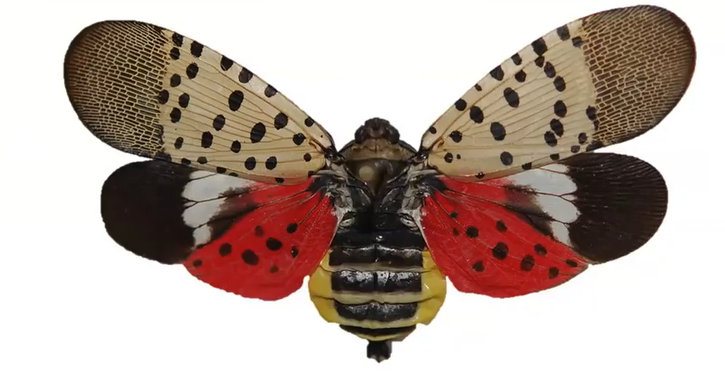
The spotted lanternfly (Lycorma delicatula) is an invasive insect that is currently in the mid-Atlantic United States and has the potential to settle in California and have a profound impact on our agriculture and natural environment. A key to slowing the spread of spotted lanternfly is early detection and rapid response, which requires education of citizens and resource professionals. This course explores the pest's lifecycle, how they feed, travel and what to do if you see it in California.
Who should enroll?
Residents of California, Master Gardeners, Arborists, Nursery Professionals, and other stakeholders.
How to enroll
Continuing Education Units
- UC Master Gardeners are eligible for 1 hour of continuing education (CE) for completing this course.
- International Society of Arboriculture (ISA) (1.0 for ISA Certified Arborists, 1.0 Utility Specialist, 1.0 Municipal Specialist, 1.0 Climber Specialist, 1.0 Aerial Lift Specialist). To get the ISA Continuing Education Units certificate you will be charged a fee of $30.
Need Help?
- For assistance with login, course enrollment, contact campushelp@extension.org
- For assistance with progress through the course or certificate, contact mgtraining@ucanr.edu
The California Department of Agriculture and the University of California Master Gardener Program.
Teacher
Lauren Snowden, UC Master Gardener Online Training Specialist

This curriculum was developed to provide a uniform, publicly-available, research-based stormwater core curriculum to:
- Build comprehension of the fundamentals of stormwater management, stormwater practices and maintenance processes
- Develop an understanding of and skills that support communicating the importance of stormwater management to community stakeholders
This training is designed for stormwater professionals such as public works and parks department staff, private contractors, stormwater managers and homeowners associations or other landowners who are responsible for a stormwater management practice. For more information or to enroll please contact Shahram Missaghi, University of Minnesota, miss0035@umn.edu
- Teacher: Shahram Missaghi
- Teacher: Deborah Weitzenkamp
- Teacher: Saundra Frerichs
- Teacher: Kate Mobarak
- Teacher: Ann O'Connor
In this workshop, participants will explore what negotiation really is (and what it is not), how to prepare for and execute a successful negotiation, and how to preserve a relationship when the negotiation is not successful. You’ll have opportunities to discuss, problem solve, and practice negotiation approaches relevant to common labor management situations. You’ll also get support and feedback developing a written plan for a negotiation that you anticipate in the coming months. The workshop is part of the 2022 Farm Labor Dashboard Workshop Series, which focuses on helping farmers build practical labor management knowledge and skills.
Presenters: Mary Peabody and Beth Holtzman, University of Vermont Extension.
Session Format: Sessions will be delivered via Zoom. Connection information, along with additional resources and information will be available through the workshop site.
Fees. The workshop fee is $35. To purchase and enroll in the course, click the following button:
Scholarships and multi-session discounts are available for all the workshop in the series, reducing the workshop fee to $20. However, these options are only available for people who request – and receive approval – for reduced fees in advance of registration and payment. To request either a multi-session discount or scholarship, please fill out this online form.
Please wait to register until you hear back from us via email. Decisions are generally made within 3 business days. If you are approved, you will receive a voucher code that you will use during the registration/payment process to activate a reduced registration fee for the workshops you indicated you wish to enroll in.
- Instructor: Beth Holtzman
- Instructor: Mary Peabody

For more information, please contact:
Course Teacher:
Beatriz Nobua-Behrmann, Ph.D
benobua@ucanr.edu
University of California Cooperative Extension – Los Angeles and Orange County
South Coast Research and Extension Center
7601 Irvine Boulevard, Irvine CA 92618
(949) 301-9182 Ext. 1006
or
Jan Gonzales
jggonzales@ucanr.edu
Goldspotted Oak Borer Education and Outreach Program Coordinator
University of California Cooperative Extension - San Diego County
Tel: 858.822.7718
- Teacher: Janis Gonzales
- Teacher: Beatriz Nobua-Behrmann
- Teacher: UC IPM Online Training Support
- Teacher: Cheryl Reynolds

This course must be completed by December 30 of the current year. Download the certificate immediately when you complete the course. You will not be able to retrieve your certificate after December 30.
For more information, please contact:
Course Teacher:
Beatriz Nobua-Behrmann, Ph.D
benobua@ucanr.edu
University of California Cooperative Extension – Los Angeles and Orange County
South Coast Research and Extension Center
7601 Irvine Boulevard, Irvine CA 92618
(949) 301-9182 Ext. 1006
OR
Jan Gonzales
jggonzales@ucanr.edu
Community Education Supervisor/Project Coordinator
University of California Cooperative Extension
9335 Hazard Way, Suite 20, San Diego, CA 92123
(619) 985-9422
- Teacher: Janis Gonzales
- Teacher: Beatriz Nobua-Behrmann
- Teacher: UC IPM Online Training Support
- Teacher: Cheryl Reynolds
The
Sustainable Bioeconomy course examines the current and future opportunities and
challenges of bioproducts and bioenergy in society. This course explores
relationships between society’s economic demand for inexpensive energy and
products and our responsibility to produce these products in environmentally
and socially responsible ways. Students explore a range of bioproduct
categories including biofuels, virgin and recycled paper and wood products, and
advanced biomaterials. A panel of instructors from multiple disciplines and
bioeconomy stakeholders will share their diverse perspectives and experiences
in the bioeconomy. Students will learn about careers available in the growing
bioeconomy sector and the knowledge and skills necessary for these jobs.
- Teacher: Richard Venditti
This online class is the pre-requisite for completion of the National Safe Tractor and Machinery Operation Program, commonly known as Tractor Safety. It is open to youth 14 years of age and up and is required to work for someone other than family. If a youth will turn 14 by August 1 they can take the course but will not receive a certificate until they turn 14.
This online module will take approximately 8 hours to complete and must be completed before May 20, 2026. Upon completion of this online module students must attend the in person session scheduled for May 22 from 8:30-4:30 at Chisholm Equipment, 594 N Commerce Ave, Harper, Kansas. Certificates of completion will not be given until all online coursework is completed, attendance for in person session is documented, final written test is passed and the equipment operation test is passed.
- Teacher: Macaley Hall
- Instructor: Jenni Carr

Course Overview
The UC ANR Youth Protection Course for Non-4-H Volunteers provides essential information about University of California policies and best practices for working with youth. The course introduces the foundations of Positive Youth Development, 2-Deep Supervision practices that support safe and appropriate interactions with youth, and volunteer responsibilities under the California Child Abuse and Neglect Reporting Act (CANRA).
Throughout the course, you will learn how your role as a UC ANR volunteer contributes to positive, safe, and welcoming experiences for young people.
Who Should Take This Course
This course is intended for UC ANR volunteers serving in programs outside of the 4-H Youth Development Program.
California 4-H volunteers should visit the California 4-H Resource Center for information about their required annual volunteer training.
Course Length
Approximately 45 minutes. The course does not need to be completed in one sitting and may be completed over multiple sessions.
- Foundations of Positive Youth Development - 10 minutes
- 2-Deep Supervision - 5 minutes
- CANRA for Volunteers - 30 minutes
- Teacher: CA 4-H Campus Tech Support

This is the training class for 2022 MG
- Director of Training : Mimi Enright
- Director of Training : Leslie Hart
- Director of Training : Judy Hatfield
- Director of Training : Laura Southworth
- Director of Training : Clio Tarazi
Thank you for joining our UC Master Gardeners of Napa County’s online training test program for 2021. Your participation, and your feedback, will be important as we develop our new hybrid training program for certification. The certification program will begin in January 2022—and your help in 2021 will be invaluable.
In this program, we will present six core topics.
Introduction to Botany.
Living Soil, Till/No Till.
Water Management.
Entomology.
Plant Pathology.
UC IPM.
A new topic will be posted every two weeks, beginning Monday January 18, 2021. Students will have two weeks to complete the required assignments. Assignments will vary by topic, and may include reading, viewing a live or recorded presentation, participation in a live demonstration or follow-along with a hands-on project, participation in a live discussion with fellow students, completion of one or more worksheets, opportunity to dive deeper using suggested resources.
- Teacher: Cynthia Kerson
- Teacher: Yvonne Rasmussen
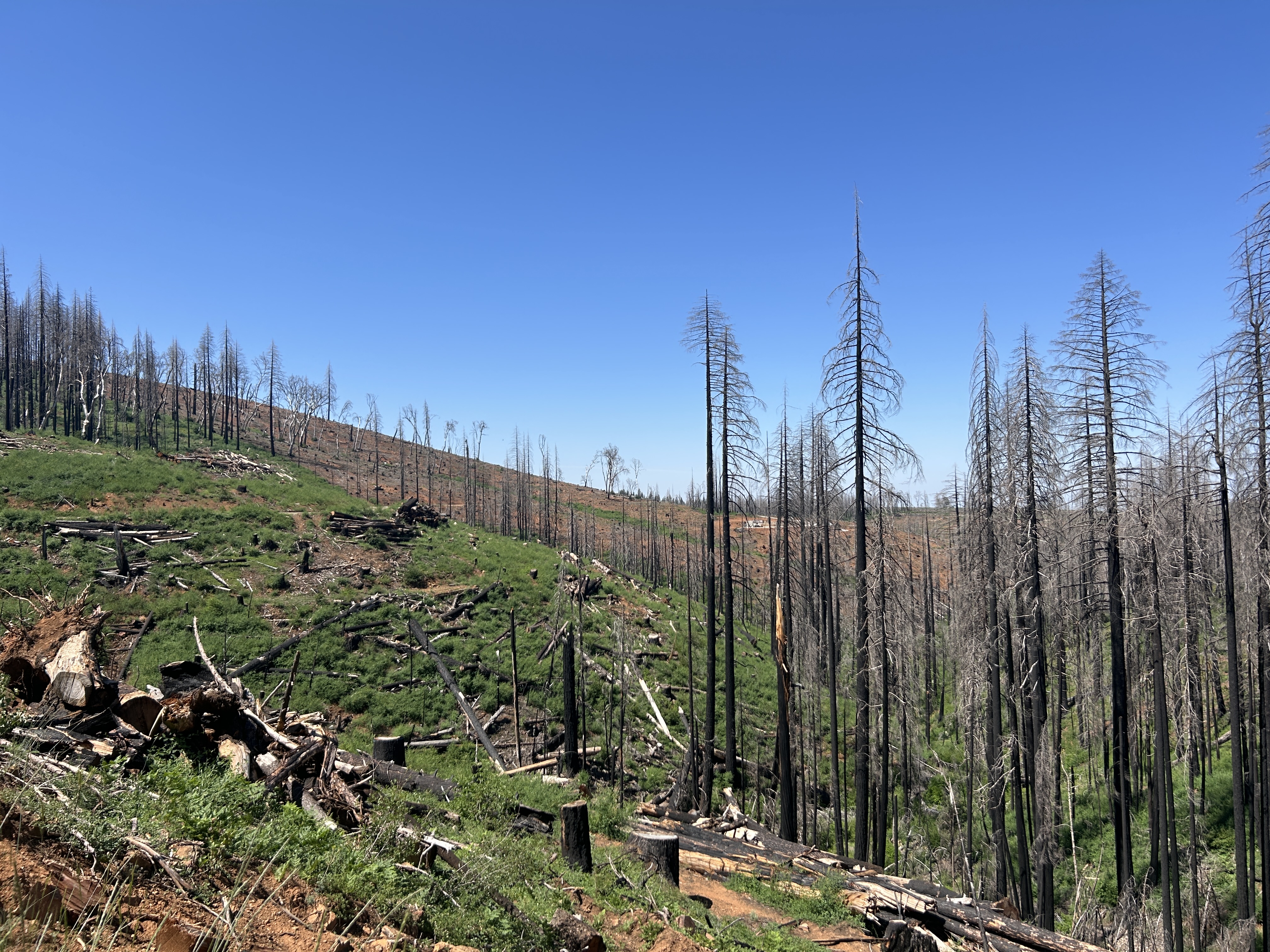
Welcome
This course is designed for small, non-industrial private landowners who want practical guidance on forest resilience after wildfire. The course will give learners the fundamental knowledge needed to understand their post-fire forest management goals and objectives. With this foundation, landowners can connect and network with local resource professionals more confidently. By the end of the course, you will be able to evaluate site conditions, set management goals, and choose strategies to restore and manage your forest.About the Course
- This introductory course gives private forest landowners a foundation for understanding post-wildfire challenges.
- The course is self-paced, can be accessed anytime, and can be taken multiple times.
- This course takes approximately 2.5 hours to complete.
Topics include:
- Post-fire forest resilience foundations and key concepts
- Post-fire safety considerations and available support resources
- Reforestation planning and implementation
- Managing competing vegetation after wildfire
You may focus on topics that are most relevant to you, but we recommend taking each lesson in order.
Who should join this course?
- California forest landowners affected by wildfire
- People who want to learn more about post-wildfire forest management and considerations
By the end of the course, participants will:
- Assess key post-fire management concerns, including post-fire safety hazards, erosion risks, reforestation needs, competing vegetation, and available assistance programs.
- Develop clear post-fire forest management goals, priorities and objectives for your property.
- Explain the ecological role of fire and its effects on forest health and resilience.
- Identify local resources, including foresters and conservation agencies, that can support your forest stewardship efforts.
This course is created by UC Cooperative Extension's Post-Fire Resilience Program. To learn more, visit the Post-Fire Resilience Program website.
UCCE Course Team
- Jordan Mesias, Instructional Designer
- Katie Reidy, Post-Fire Forest Resilience Stewardship Coordinator
- Susie Kocher, Forest Advisor - Central Sierra, Registered Professional Forester
Questions? Contact Katie Reidy at kkreidy@ucanr.edu
- Teacher: Jordan Mesias
- Teacher: Katie Reidy
The audience for this UF/IFAS Extension Broward County Master Gardener Training Online course is students who have applied, interviewed, and been accepted into our program. This online component will be the main class platform in addition to weekly live Zoom meetings.
For more information or to enroll, please contact Steve Deegan –teacher and content specialist- UF/IFAS Extension Broward County, Urban Horticulture Education and Master Gardener Volunteer Coordinator stephen.deegan@ufl.edu
- Teacher: Lorna Bravo
- Teacher: Stephen Deegan

The goal of this toolbox is to equip agricultural professionals (I.e., ag-educators, extension professionals, crop consultants) with a broad understanding of AI and its potential role in sustainable agriculture, along with knowledge, skills and abilities to strategically communicate about this emerging technology and its risks and opportunities with agricultural audiences.
The instructional video course includes 10 asynchronous lectures and associated activities that can be engaged with at participants' convenience. Participants who complete all modules will receive a certificate of completion from Washington State University's Center for Sustaining Agriculture and Natural Resources.
This course is intended to be open, accessible and free-of-charge. No coursework is required for completion. However, the course is available for .3 Continuing Education Units (CEUs) with a $10 fee. If you take the course for CEUs, the pre- and post-survey must be completed to receive credit. Instructions for taking the course for CEUs are provided in the opening section of the course.
Participants will have the opportunity to:
- achieve a deeper awareness of AI in both society and sustainable agriculture;
- grow their understanding of the risks and benefits of using AI systems to achieve sustainable agriculture goals;
- develop knowledge of behavioral models predicting AI adoption among different audiences;
- obtain skills in utilizing strategic science communication theory to construct, frame and diffuse messages surrounding AI, its risks and opportunities;
- improve their confidence and abilities to facilitate engagement with AI in sustainable agriculture.
- Presenter: Alex Kirkpatrick
- Presenter: Morgan Lawrence

Understanding how a bit works in the horse's mouth will help you select the most appropriate bit for the job and appreciate the craftsmanship of well balanced and constructed bits.
The fee for this course is $10. To purchase and enroll in the course, click the following button.
If you purchase at least $40 worth of courses from this category, you can receive a 20% discount by entering the voucher code of HorseQuest20.
- Teacher: Kathy Anderson
- Teacher: Colleen Brady
- Teacher: Kris Hiney