
Extension Foundation Online Campus
North Carolina Certification for Nutrient Management Planners is a course for Local, state, and federal agency personnel involved in nutrient management planning in North Carolina. This course is part one of a five part certification program required of anyone certifying nutrient management plans in North Carolina. For more information or to enroll contact Dr. Stephanie Kulesza, NC State University - Crop and Soil Sciences at sbkulesz@ncsu.edu
Intended for secondary educators and their students, this curriculum will provide agricultural background knowledge and facilitate experimental design, data collection, and analysis of results through the use of a new online web-based and mobile-optimized tool, AgConnect. AgConnect follows the scientific method from hypothesis to conclusion and includes prompts to design an experiment, a notebook to record data collection and observations, data analysis tools, results display pages, and the option to download entries to share data in presentations, posters, and reports.
The complementary AgConnect curriculum includes guiding questions so students can engage in peer-to-peer learning and sharing about: 1) the relationships between environmental conditions, suitable crops, economic impacts, and cultural connections; 2) relevant agricultural issues, questions, and potential solutions unique to each region; and 3) comparison of experimental processes, challenges, 'a-ha' moments, and results.
- Teacher: Susan Brouillette
- Teacher: Lindsey Ruhl
The Manure Composting course comes to you from the Animal Science Program at Rutgers Cooperative Extension with help from their friends at the Office of Continuing Professional Education.
- Teacher: Brian Warzak
The Manure Composting course comes to you from the Animal Science Program at Rutgers Cooperative Extension with help from their friends at the Office of Continuing Professional Education.
- Teacher: Brian Warzak
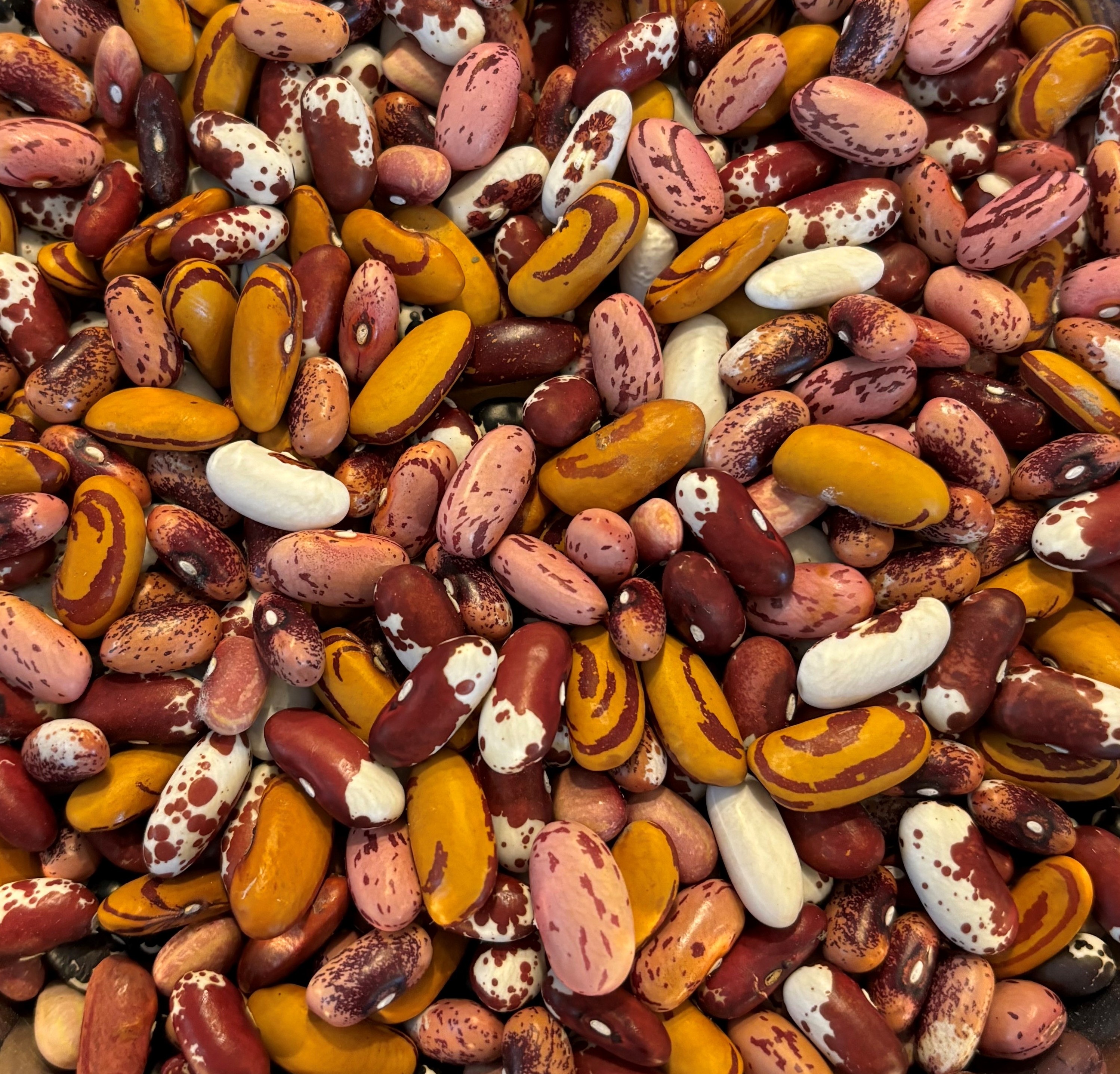
This online course for farmers presents a comprehensive overview of organic dry bean production, covering key topics such as production and management, weed control, pest and disease management, and harvesting and storing dry beans. This course draws on both research-based knowledge and practical field experience to help farmers establish or improve dry bean production systems.
- Teacher: Heather Darby
- Teacher: Ivy Krezinski
- Teacher: Shannon MacDonald
Pen Rider and Processors on-line Horse Safety and Care is for feedlot and cattle producers and employees. In this course participants will learn how to safely handle horses when working in feed yards as well as basic horse care and management.
For more information about the course or how to enroll contact Kathy Anderson with the University of Nebraska Extension at kanderson@unl.edu
This course requires a $25 registration fee. Once the registration fee is paid, you will get an email with an ENROLLMENT KEY.
Please go to: Pen Rider and Processors Horse Safety and Care Certification Course at http://marketplace.unl.edu/extension/programs/feedlot-horse.html to enroll.
- Teacher: Kathy Anderson
- Teacher: Colleen Brady
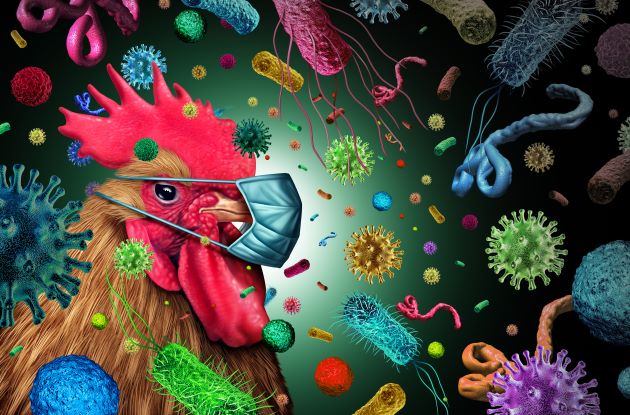
The audience for this course is: New and existing veterinarians
By taking this course, students will learn: More about poultry medicine so that they can feel more comfortable having with the owners of small and home poultry flocks.
The course will work on a tablet as well as a computer.
For more information or to enroll please contact Jacquie Jacob, University of Kentucky Jacquie.jacob@uky.edu
- Teacher: David Frame
- Teacher: R. Mick Fulton
- Teacher: Jacquie Jacob
- Teacher: Tony Pescatore
Precision agriculture is an integral part of today's crop production. It's steady stream of technological improvements makes it hard for farmers and other ag professionals to stay current.
This nine part course features precision Agriculture's educator of the year Dr. John Fulton and Extension Specialist Mark Hall. Each lesson features video instruction, handouts and a test. Students who make 80% or higher on all the test and complete a course evaluation will receive a certificate of completion. Students are welcome to audit the course without taking the test. For more information or to enroll contact hallmah@auburn.edu
- Teacher: John Fulton
To provide education and resources for new technical assistance providers with foundational information around grazing planning and providing grazing-related support to production livestock farmers in Vermont. Topic focuses include how to develop a grazing plan, grazing infrastructure, grazing record keeping, soil health in grazing systems, and pasture improvement and maintenance strategies.
- Teacher: Shannon MacDonald
- Teacher: Amber Machia
- Teacher: Sara Ziegler
Soybean growers who take this course will learn basic soybean production principles including how to select what variety group of soybeans to plant.
For more information or to enroll please contact Mark Hall at hallmah@auburn.edu
- Teacher: John Fulton
- Teacher: Susan Brouillette

The goal of this toolbox is to equip agricultural professionals (I.e., ag-educators, extension professionals, crop consultants) with a broad understanding of AI and its potential role in sustainable agriculture, along with knowledge, skills and abilities to strategically communicate about this emerging technology and its risks and opportunities with agricultural audiences.
The instructional video course includes 10 asynchronous lectures and associated activities that can be engaged with at participants' convenience. Participants who complete all modules will receive a certificate of completion from Washington State University's Center for Sustaining Agriculture and Natural Resources.
This course is intended to be open, accessible and free-of-charge. No coursework is required for completion. However, the course is available for .3 Continuing Education Units (CEUs) with a $10 fee. If you take the course for CEUs, the pre- and post-survey must be completed to receive credit. Instructions for taking the course for CEUs are provided in the opening section of the course.
Participants will have the opportunity to:
- achieve a deeper awareness of AI in both society and sustainable agriculture;
- grow their understanding of the risks and benefits of using AI systems to achieve sustainable agriculture goals;
- develop knowledge of behavioral models predicting AI adoption among different audiences;
- obtain skills in utilizing strategic science communication theory to construct, frame and diffuse messages surrounding AI, its risks and opportunities;
- improve their confidence and abilities to facilitate engagement with AI in sustainable agriculture.
- Presenter: Alex Kirkpatrick
- Presenter: Morgan Lawrence
The audience for this course includes Vermont custom manure applicator business owners and employees and interested ag service providers.
As a result of taking this course, participants will learn about Vermont’s Required Agricultural Practices (RAPs), regulatory requirements for custom manure applicators in Vermont, nutrient management plans as they relate to custom applicators, and record-keeping requirements. This course includes videos which requires a good internet connection.
For more information, suggestions, or feedback: Lindsey Ruhl, University of Vermont Extension, lindsey.ruhl@uvm.edu.
- Teacher: Susan Brouillette
- Teacher: Lindsey Ruhl
As a result of taking this course, participants will learn about Vermont’s Required Agricultural Practices (RAPs), how to take a soil sample and interpret results, how to take a manure sample and interpret results, field by field nutrient management planning, record-keeping requirements, and how to calibrate manure spreaders. This course includes videos, resources, references, and worksheets.
For more information or to enroll contact: Lindsey Ruhl, University of Vermont Extension, lindsey.ruhl@uvm.edu.
This course has been made possible with generous funding from the Vermont Agency of Agricultural Food and Markets Clean Water Initiative Grant, "Innovative Training Tools to Help Small Farm Operations Comply with Required Agricultural Practices," grant #02200-ARM-CWF-2017-UVM.
- Teacher: Lindsey Ruhl
The WASBA Master Beekeeper Course is run by Washington State University and the Washington State Beekeepers Association (WASBA). Students are admitted after submitting applications to WASBA and finishing a screening process. This course covers beekeeping management practices, advanced honeybee biology, scientific methods for investigating bee related issues, and more!
Please contact WASBA at wasbaeducation@gmail.com for information.
- Teacher: Priyadarshini Chakrabarti Basu
This course guides participants through a process to realistically evaluate their goals and resources and provides the tools to evaluate the feasibility of starting a sustainable small acreage enterprise in Idaho. Course topics include whole farm planning, resource evaluation, site-appropriate production practices, market analysis and enterprise budgets. Upon course completion, project participants will have the knowledge and skills to engage in whole farm planning.Note:
Course enrollment is limited to participants in Idaho and Washington.
For more information or to enroll please contact Kate Wood, University of Idaho, at cultivatingsuccess@uidaho.edu.
- Instructor: Colette DePhelps
- Instructor: Kate Wood
The information and resources included in this curriculum are intended as supplemental material providing examples of concepts commonly covered in a chainsaw safety training event. This online course was developed by members of the Women Owning Women's (WOW) network, is designed for women+, and provides the opportunity for a hybrid approach to learning. A women's chainsaw course differs from a general chainsaw safety course in a few ways. We will cover the extra considerations women may need to make in finding appropriate PPE that fits well. We also discuss different techniques and body mechanics to accommodate our bodies’ different abilities. You can begin with this chainsaw safety basics course online, followed by an in-person chainsaw workshop and practice in the field with someone experienced in using a chainsaw. You can come back to visit and revisit the information in the online course at any point in time, or whenever you need to refresh your memory on a specific topic.
- Teacher: tish carr
- Teacher: Jennifer Fawcett
- Teacher: Cora Stewart
Beef Cow
Basics-Plus is a 12 module course that provides cutting edge information on nutrition, forages, supplements, and
economics. A short quiz at the
end of each lesson for self-assessment assures that concepts are
understood.Once all of the quizzes are completed, a certificate of completion can be printed. Modules include: Goals for the Cow/Calf Producer, Basic Considerations for Cow Nutrition, Metabolizable Protein System, Minerals and Vitamins for Beef Cows, Replacement Heifer Nutrition, Basic Ration Formulation, Forage Analysis and Inventory, Perennial Forage Production, Annual Forage Crops, Alfalfa Production: Opportunities for Improvement, Livestock Grazing Management on Range and Pasture, and Feed Ration Economics. It is important that you, as a beef producer, have confidence, competence, and direction to be a successful livestock producer. Beef Cow Basics-Plus will help capitalize on your own unique resources and skills. It provides the basics for anyone interested in beef cow production including high school students, homeschool students, older 4-H and FFA members, community college students, and university students.
This course has been approved for 12 American Registry of Professional Animal Scientists (ARPAS) Continuing Education Units (CEU’s). For more information contact Troy Walz, Nebraska Extension Educator, at troy.walz@unl.edu
To purchase and enroll, click the appropriate link below:
- Teacher: Steve Pritchard
- Teacher: Troy Walz
- Content Specialists: Mary Jarvi