
Extension Foundation Online Campus
搜索结果: 540
Each units is designed to help students learn the core tasks of being a Planning Official.
In order to offer this online learning opportunity and maintain consistency between the classroom course and the online units, each unit includes content equal to or more than what is provided in the classroom sessions. Each unit is designed to take between 45 minutes to an hour. However, you can stop and restart a unit at your convenience.
For more information, contact Kara Salazar (salazark@purdue.edu)
The fee for the full series (101, 201, Exam) is $200. Click this button to purchase and enroll in this series of courses:
- Teacher: Kelsey Johnson
- Teacher: Brad Neumann
- Teacher: Kara Salazar
- Teacher: Gwyn Shelle
- Teacher: Daniel Earl Walker
Our Vision is a healthier world through environmental stewardship.
Our Mission is to support the University of Maryland Extension mission by educating residents about safe, effective and sustainable horticultural practices that build healthy gardens, landscapes, and communities.
Our History
The UME Master Gardener Program began in 1978 as a means to extend science-based knowledge to the general public by providing horticultural and pest management expertise to help protect and improve Maryland’s natural resources. Today, this popular program can be found in 20 Maryland counties and Baltimore City.
UME Master Gardeners are volunteers who combine their love of plants, people, and the environment to help residents in their communities solve problems and make environmentally-sound decisions.
Timeline of classes will be every Wednesday night 6-8PM from September 3rd until November 19th at the Anne Arundel County Extension Office, 97 Dairy Lane, Gambrills, MD 21054. We will be covering topics such as Entomology and Invasive Insects, Plant Pathology, Botany, Integrated Pest Management, Soil Science, Plant Nutrition, Ecology, Bay-Wise and Conservation Landscaping, Vegetables, Native Plants, and Plant Identification. Students will need to complete one module and quiz a week and attend the in-person class.
- Teacher: Maxine Da-Som Yoon
Tuesday evening class sessions | Live via Zoom
January 19, 26 and February 2, 9, 16, & 23
6:00 - 9:00 pm PST
- Teacher: Colette DePhelps
- Instructor: Cheyanne Myers
- Instructor: Jen Werlin
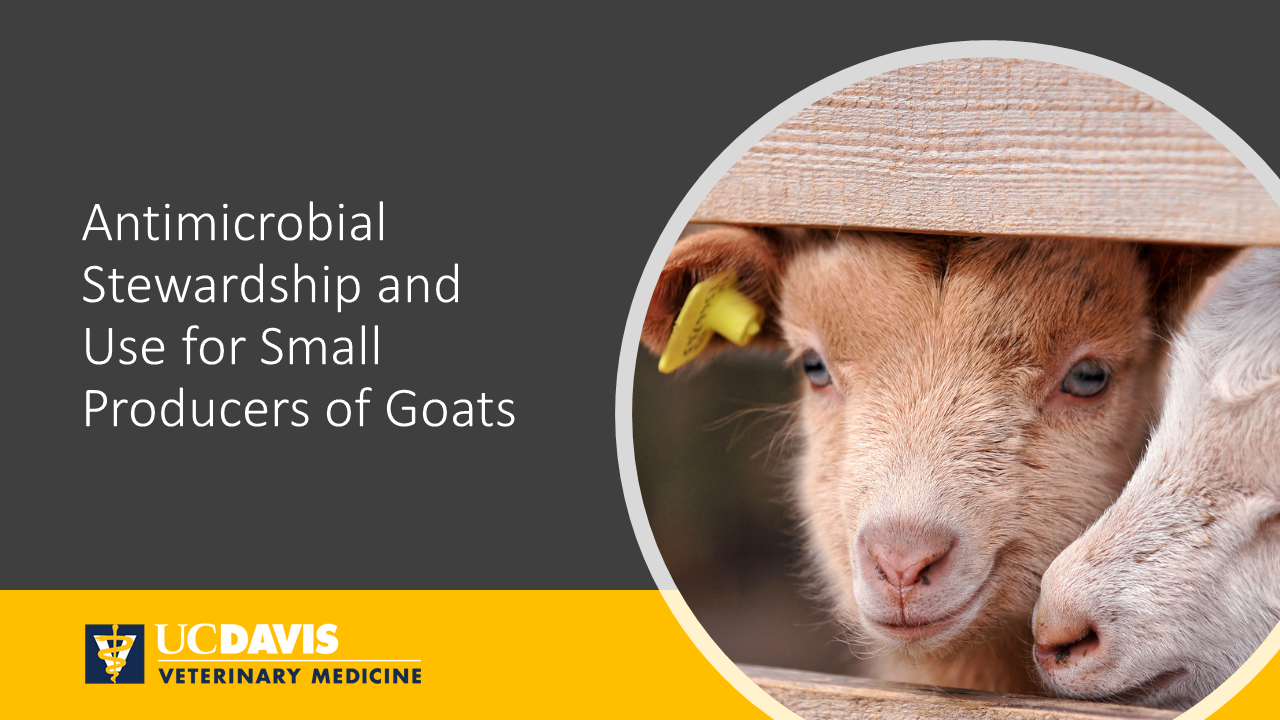
This course provides an introduction to topics related to antimicrobial stewardship with the goal of promoting behaviors that reduce the risk of antimicrobial resistance. Learning materials include video lessons and interactive modules to build knowledge and skills relative to goat husbandry and veterinary care.
- Teacher: Cheryl Meehan
- Teacher: Craig Miramontes
This course is not available to the public at this time
- Teacher: Petr Kosina
- Teacher: UC IPM Online Training Support
- Teacher: Cheryl Reynolds

Course overview
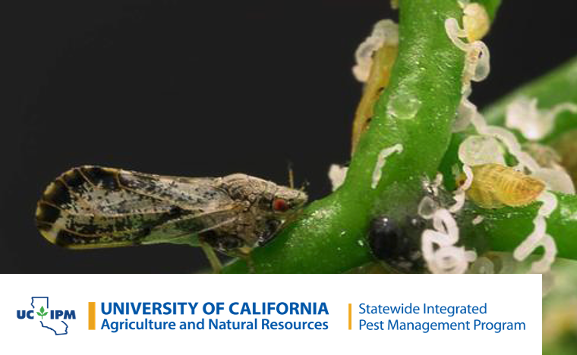
This course provides information on limiting psyllid infestations in gardens and landscapes and minimizing their role in psyllid and disease spread. This includes understanding the biology of the insect and disease, how to look for each of them, existing control strategies, and best management practices in urban settings.
This course was authored by Dr. Beth Grafton-Cardwell (UCCE Emerita Entomology Specialist).
Who should enroll?
Homeowners and gardeners
This course has not been approved for Continuing Education Units.
- Technical support: UC IPM Online Training Support

Course overview
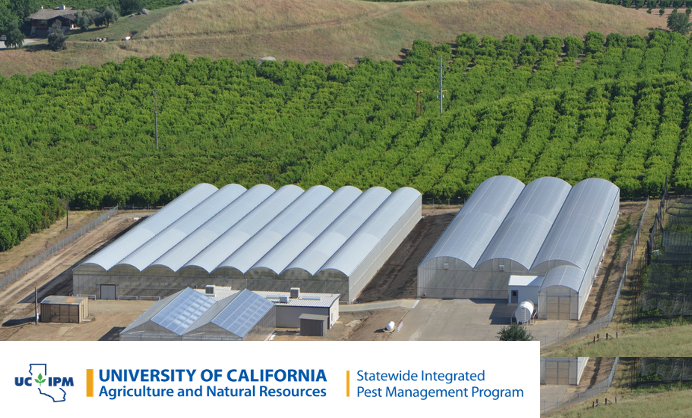
This course provides information to retail nursery and garden center personnel to limit psyllid infestations in these environments and minimize their role in psyllid and disease spread. This includes understanding the biology of the insect and disease, how to look for each of them, existing control strategies, and best management practices in a nursery setting.
Who should enroll?
Retail nursery and garden center personnel
This course has not been approved for Continuing Education Units.
- Technical support: UC IPM Online Training Support
Course Name: AT001-Solar Photovoltaic (PV) Technology Basics
This course will cover how solar photovoltaic energy systems work focusing on what takes place within the solar PV cell and how electricity is produced. The type of electrical current and electrical terms and definitions commonly used in the solar energy industry including power, watts, voltage, current, and resistance are presented. Questions? Contact Dr. Edward Franklin at uafrank0@arizona.edu.
The course contains video so it requires a computer that can play audio and video.
- Teacher: Vaeaps Box
- Teacher: Jody Dean
- Teacher: Don Dinwiddie
- Teacher: Robert Masson
Course Name: AT001B-Solar PV Basics: Load Analysis
This course is the second installment in the class AT001 - Solar Photovoltaic Basics. This class teaches you how to calculate the size required for solar systems by analyzing the load of the devices you plan to operate.
The course contains video so it requires a computer that can play audio and video.
- Teacher: Vaeaps Box
- Teacher: Jody Dean
- Teacher: Don Dinwiddie
- Teacher: Robert Masson
Course Name: AT002-Types of Solar PV Systems
This course will cover the types of solar PV systems including PV-direct, Grid-connect, Stand-alone, and Multi-modal systems. We will address where these systems are found in our communities, our homes, schools, and businesses. Questions? Contact Dr. Edward Franklin at uafrank0@arizona.edu
The course contains video so it requires a computer that can play audio and video.
- Teacher: Vaeaps Box
- Teacher: Jody Dean
- Teacher: Don Dinwiddie
- Teacher: Robert Masson
Course Name: AT003-Solar PV Modules
This video is the first installment in the AT003 course focusing on Solar Photovoltaic Modules and how to interpret the module cut sheets. Contact uafrank0@arizona.edu with any questions about the course!
The course contains video so it requires a computer that can play audio and video.
- Teacher: Vaeaps Box
- Teacher: Jody Dean
- Teacher: Don Dinwiddie
- Teacher: Brandon Green
- Teacher: Robert Masson
Course Name: AT007-Pumping Water with Solar PV Energy
This course will cover the use of solar PV energy to power submersible wells used in agriculture. Topics will include: DC pumps, Pump controllers, Safety Disconnects, Combiner Box, Mounting systems, Modules & arrays, Wiring & connections Questions? Contact Dr. Ed Franklin at uafrank0@arizona.edu
The course contains video so it requires a computer that can play audio and video.
- Teacher: Vaeaps Box
- Teacher: Jody Dean
- Teacher: Don Dinwiddie
- Teacher: Robert Masson
Course Name: AT009-Drone Applications in Agriculture
This course will address the use of drones for agriculture including spray applications, and field data acquisition. Questions? Contact Dr. Ed Franklin at uafrank0@arizona.edu
The course contains video so it requires a computer that can play audio and video.
- Teacher: Vaeaps Box
- Teacher: Jody Dean
- Teacher: Don Dinwiddie
- Teacher: Robert Masson
This course serves as a tool for small flock, backyard, homestead, and hobby poultry owners to become more informed on avian influenza (AI). You will learn how AI can affect you and your flocks, biosecurity measures that should be practiced to prevent disease and how to respond and recover in an event of an outbreak. Upon completion of this course you may take the final exam to receive your Avian Influenza Biosecurity Certificate. This course material may be reproduced free of charge for public use, however, it is not be be used for profit or financial gain.
Any questions about this course should be directed to Nathaniel Tablante at nlt@umd.edu
To learn more you may want to visit the eXetension Avian Influenza Homepage or the Avian Influenza Facebook Page
- Teacher: Brett Kreifels
Avian Influenza Biosecurity for Emergency Responders is a self-directed certification course designed for emergency response personnel. Participants will gain vital information on bio-security measures and emergency management procedures that are necessary to prevent, contain, and recover an avian influenza outbreak. For more information contact Nathaniel Tablante, University of Maryland at nlt@umd.edu.
- Teacher: Brett Kreifels
For more information about this course contact Nathaniel Tablante, University of Maryland at nlt@umd.edu.
- Teacher: Brett Kreifels
Knowing general information about horse welfare, behavior, nutrition, health and regulations is essential to keeping your horse happy and healthy. This learning module gives an overview of the care and management of horses, with information ranging from daily health checks to management & control of diseases and parasites.
For information contact Colleen Brady, at bradyc@purdue.edu.
The fee for this course is $10. To purchase and enroll in the course, click the following button:
If you purchase at least $40 worth of courses from this category, you can receive a 20% discount by entering the voucher code of HorseQuest20.
- Teacher: Kathy Anderson
- Teacher: Colleen Brady
Basic Radio 101 for North Dakota Emergency Responders is a self-directed course for paid and volunteer people who serve in EMS, law enforcement, firefighting and other first responder activities. Participants will learn how to use their radios appropriately, protocols to follow and how to troubleshoot common problems. For more information, contact Brenda Vossler, N.D. Department of Emergency Services training and exercise officer, at (701) 328-8106 or blvossler@nd.gov. For technical support, contact Becky Koch, (701) 231-7875 or becky.koch@ndsu.edu, with North Dakota State University Agriculture Communication.
- Teacher: Becky Koch
For more information or to enroll contact Patricia Rayas-Duarte, Oklahoma State, pat.rayas_duarte@okstate.edu or Dwayne Hunter, Oklahoma State, dwayne.hunter@okstate.edu
- Teacher: Dwayne Hunter
- Teacher: Steve Pritchard
- Teacher: Troy Walz
Welcome to the Beginner’s Guide to Garden Programming!
This course provides background information to support school and community garden programming. Individual modules teach about best practices for outdoor classroom management, facilitating harvest celebrations, hosting community garden workdays and managing large groups in the garden.
This course is brought to you by CalFresh Healthy Living, University of California. For additional materials and resources to support school and community gardens, visit the CalFresh Healthy Living, UC Garden Webpage [https://uccalfresh.ucdavis.edu/initiatives/gardening].
- Teacher: Lyn Brock
- Teacher: Karina Hathorn
- Teacher: Anna Jones
The City of Bozeman Advisory Board Member Training is intended for the City Advisory Board Members of Bozeman, Montana. This is a self directed course, which should take less than one hour to complete. This course is intended to educate employees and public officials in best practices and legal requirements. It details specific ethical requirements and provides guidance on obtaining information and filing complaints. For detailed instructions on how to login and enroll in this course, take a few minutes and read through the Enrollment Instructions & Helpful Tips document.
For questions or concerns regarding this course, contact Brenda Sweeney, Deputy City Clerk, at (406) 582-2320 or bsweeney@bozeman.net.
- Teacher: Ashley Kent
- Teacher: Lydia Maunz
Students will learn skills to prepare them for post-secondary opportunities. In the 11th grade course, students will learn about scholarships and financial aid, resumes and applications, interviews, and post-secondary options.
- Teacher: Mindy Aragon
- Teacher: Leah Haxton
This 3-part series begins with the DiSC© Workplace assessment* where participants learn about their preferred work styles and environment. We discuss why this self-awareness is critical to being an effective leader/manager and explore some strategies for anticipating what future employees might be looking for in a manager.
Session 2 dives into organizational culture as it shows up on your farm and why being transparent about the culture you are striving for matters in building a farm team. We will spend time assessing your current culture and exploring strategies to either amplify or change it. We'll share tips on how you can anticipate someone's work style and preferences based on some very common observations.
Session 3 will be an interactive look at how, why and when conflict arises in work environments. We explore strategies to address the role of the manager when there is conflict within the work team, how different DiSC© profiles approach conflict, how to model productive conflict, and how to move beyond conflict and emerge as a stronger team.
These are interactive sessions, and your participation will be critical to our collective learning. Resources will be provided in advance and participants should plan time to review the materials prior to each session. Participants will leave the series with an action plan designed to get your growing season off to a successful start.
- Teacher: Beth Holtzman
- Teacher: Mary Peabody


About the Course:
This course is for program directors, coordinators, staff or anyone directly involved in working with volunteers.
Upon completion of this course, learners should be able to:
- Describe the benefits volunteers provide to programs and organizations
- Identify the roles and responsibilities of those involved in working with volunteers
- Identify the characteristics of an effective volunteer program
- Use the 7-step ISOTURE model to help build volunteer engagement
Along the way, learners will assess their own program, using self-guided activities and resources and develop a volunteer engagement action plan.
|
California Cooperative Extension Staff |
Free with enrollment key (contact your State Coordinator for enrollment key)
|
|
|
|
|
Non-California Users |
|
|
1-4 Seats |
$30 each |
|
5-49 Seats |
$25 each |
|
50-99 Seats |
$20 each |
|
100 or more Seats |
$10 each |
Contact:
For more information or to enroll please contact:
- Gemma Miner, UC ANR, Academic Coordinator for Volunteer Engagement gmminer@ucanr.edu
- UC ANR Course Support, idevelopsupport@ucanr.edu
- ANR Administrator: CA 4-H Campus Tech Support
- ANR Administrator: Zeva Cho
- ANR Administrator: Scott Mautte
- ANR Administrator: Gemma Miner
- ANR Administrator: Lauren Snowden
This course will help you become a better facilitator in a rapidly evolving virtual world.
Do you find yourself leading more virtual groups? Would you like to improve engagement? Better manage the group’s process and challenges? Have more confidence with the multiple aspects of virtual technology? Adapt proven techniques and tools for a virtual environment? Join us as we explore the emerging best practices of virtual facilitation skills. This course builds on the well-known Strengthening Your Facilitation Skills Level One training. We will build confidence and practice skills in a safe, supportive space.
This course consists of two parts. Each week there will be videos, resource materials and discussion threads for you to engage with prior to our live weekly sessions. These materials will prepare you for for the live, weekly gatherings where we will focus our time on opportunities for deeper discussion of the issues and facilitation practice. It is important that you build time into your schedule for both of these components.
Live Weekly Sessions: (All Times are Eastern)
* April 17, 2024 | 12:00-2:00pm
* April 24, 2024 | 12:00-2:00pm
* May 1, 2024 | 12:00-2:00pm
* May 8, 2024 | 12:00-2:00pm
*May 15, 2024 | 12:00-2:00pm
- Teacher: Suzanne Cagle
- Teacher: Melissa Lee
- Teacher: Michael Polizzotti
- Teacher: Scott Slattery
For experienced facilitators interested in expanding their facilitation skills and implementing this training program as instructors, we are offering a Train the Trainer course concurrent with the core Building Your Virtual Facilitation Skills training.
Train the Trainer participants will be expected to engage in core course content to gain familiarity with the content and structure of the training. In addition to core content, Train the Trainer cohort participants will participate in an additional hour per week of Live content as well as additional content on the course page to build skills in virtual content creation/adaptation and delivery.
Building Your Virtual Facilitation Skills, Train the Trainer participants will receive access to instructor materials including facilitator outlines for each session, course planning materials and web platform participant materials. Cohort sessions will explore implementation best practices, with technical support for adapting and implementing the training in your state.
Live Weekly Sessions, Fall Series: (All Times are Eastern)
Note: The first two hours of each live session are core content. The third hour includes only the train the trainer cohort.
* March 22, 2023 | 12:00-3:00pm
* March 29, 2023 | 12:00-3:00pm
* April 5, 2023 | 12:00-3:00pm
* April 12, 2023 | 12:00-3:00pm
*April 19, 2023 | 12:00-3:00pm
For any questions, please reach out to Sue Cagle at sue.cagle@unh.edu.
****This course is now full for the spring 2023 semester. Please contact the instructor with questions concerning future offerings.****- Teacher: Suzanne Cagle
The audience for this Buying a Tractor course is Farmers and land owners who are interested in learning how to select the correct tractor for the intended purpose.
For more information or to enroll please contact: Mark Hall, Auburn University/ Alabama Cooperative Extension System, at hallmah@auburn.edu
- Teacher: John Fulton
Course Overview:
The purpose of the California 4-H Presentation Program is to help youth improve their public speaking abilities. Presentation events are one strategy to reach this goal by allowing youth to practice the knowledge and skills gained and receive constructive feedback on their progress. This requires that evaluations be accurate and consistent.
The Presentation Evaluator Certification is designed to prepare individuals to evaluate California 4-H presentations accurately and consistently. This course consists of two parts:
- Presentation Evaluator Orientation Course which is designed to provide an overview of the presentation program while offering best practices on how to effectively complete a presentation evaluation assessment and provide written feedback.
- Presentation Format Calibration Certifications
which offer individuals an opportunity to
measure their level of evaluation expertise for each presentation format
through a series of calibration exams.
Learners who successfully calibrate each presentation format with a score of 80% or greater will receive an electronic badge, certificate, and are certified to evaluate on that specific presentation format. When all presentation formats have been successfully completed, the individual will earn the "Master 4-H Presentation Evaluator" achievement badge and certificate.
This course is designed for individual participation and not for group settings.
Who Should Attend:
The course is designed for California 4-H volunteers or program partners, ages 16 and up, who
desire to be a presentation evaluator at county, regional, or state
presentation events.
Technical Support
If you are experiencing technical difficulties with any portion of this course, please submit a help ticket at http://bit.ly/4hsupport.
Sections of the course may take longer to load based on individual internet bandwidth and connectivity. Outdated technology such as legacy operating systems or older versions of web browsers may affect access to this course or the quality of this training experience.
- Teacher: Vera M. Bullard
- Teacher: CA 4-H Campus Tech Support
- Teacher: Zeva Cho
- Teacher: Gemma Miner