
Extension Foundation Online Campus
Результати пошуку: 454
Course Name: AB014-Ownership, Liability, and Risk
This course covers different business structures and the advantages and disadvantages of each. For example, a sole proprietorship (the most common type of business structure) is owned and operated by a single individual. Sole proprietorship has the most flexibility of the business structures, but this flexibility comes with a price—unlimited liability. This class also covers risk and risk management. Areas of risk can include production, financial, price, institutional, or human. This module will teach participants how to evaluate the level of risk in their businesses or farms and create plans for corrective measures to avoid or minimize risk. Identifying and managing risk in the early stages of the planning phase is important. 1. Business structures and the pros and cons of each 2. Risk management 3. Tools for managing risk 4. Analyzing on farm risk 5. Food safety issues 6. Disaster preparedness Questions? Email Trent Teegerstrom at tteegers@ag.arizona.edu.
The course contains video so it requires a computer that can play audio and video.
- Teacher: Jody Dean
- Teacher: Don Dinwiddie
- Teacher: Robert Masson
Course Name: AB015-Tax Issues for Farmers and Ranchers
This course introduces common tax filing issues for owners of small businesses or farms. The information presented in this module comes from the Ruraltax.org website, which contains a variety of small farm tax examples that could be used to supplement the presentation. This module briefly touches of individual tribal tax and deferred tax issues. This module is not meant to be a comprehensive look at taxes and tax issues; rather, it is meant to help participants become more aware of the types of tax issues that exist. 1. Basic tax forms 2. Schedule F 3. Self-employment taxes 4. Hobby loss rules 5. Form 1099 6. Individual tribal taxes 7. Section 179 8. Depreciation and estate taxes Questions? Contact Trent Teegerstrom at tteegers@ag.arizona.edu.The course contains video so it requires a computer that can play audio and video.
- Teacher: Jody Dean
- Teacher: Don Dinwiddie
- Teacher: Robert Masson


- Teacher: Lyra Bach
- Teacher: Cathryn Peshlakai
- Teacher: Lisa Whipple
- Teacher: Sarah Wright
- Teacher: Geraldine Wynn

Pesticide product labeling is the
main method of communication between a pesticide manufacturer and pesticide
users. The information printed on or attached to the pesticide container is the
label. Labeling includes the label plus all other information you
receive from the manufacturer about the product when you buy it.
Credits for this course are currently available for New Hampshire, Maine, Vermont, Massachusetts, Connecticut, Rhode Island and Pennsylvania.
For more information or to enroll please contact Rachel Maccini, Pesticide Safety Education Program Coordinator, University of New Hampshire.
The fee for this course is $40. To purchase and enroll in it, select the following button:
- Teacher: Rachel Maccini

Credits for this course are currently available for New Hampshire, Maine, Vermont, Massachusetts, Connecticut, Rhode Island and Pennsylvania.
- Teacher: Rachel Maccini

By taking this course, students will learn:
The Worker Protection Standard (WPS) is a regulation developed by the United States Environmental Protection Agency (EPA) to protect workers and handlers from the harmful effects of pesticides and their residues. The standard went through some major
revisions in 2015 and this course will reflect those changes.
This course will cover some of the major points of the Worker Protection Standard and what employers need to cover with their employees in order to comply.
Once you've completed this course, you should be able to:
- Define a worker and a handler
- Understand the importance of the WPS
- Know when compliance is necessary
- Identify the basic requirements needed by both a worker and handler to reduce their pesticide exposure
Watch the presentation from beginning to end. There are review questions interspersed to help you review the information. When you feel you are comfortable with the information, take the final assessment below Jeopardy game.
For more information please contact Rachel Maccini, Pesticide Safety Education Program Coordinator, University of New Hampshire, Cooperative Extension.
The fee for the course is $40. To purchase and enroll in the course, click the following button:
- Teacher: Rachel Maccini
This course will prepare you for Idaho State Department of Agriculture pesticide exam Agriculture Crop Pest Control (AC) category. For professional applicators who use or oversee the use of pesticides in the production of agricultural commodities, including grasslands and non-crop agricultural lands.
You will have access to eight online instructional sessions to complete at your own pace. Each session contains an outline to use for enhancing your study and quizzes to evaluate your knowledge.
The fee for this course is $75-one month access. To purchase and enroll in the course, click the following button:
- Teacher: cals ipm
The audience for this course is:
The goal of this curriculum is to build environmental literacy as it relates to agricultural production among future farmers and the educators that work within this field. The objective, scientifically-sound curriculum is for secondary students (career and technical centers, grades 9-12). It goes beyond simply sharing information and providing outreach to require students to problem-solve, think critically, have a systems approach, as budding farmers, and embody environmental stewardship with their management decisions.
By taking this course, students will learn:
Topics include: watersheds, reading the soil, soil management practices, nutrient management planning, precision agricultural technology tools, agricultural and environmental policy, and a case study. Each unit is complete with lectures, activities, scoring rubrics, proficiency standards, and field trips which helps make the curriculum widely accessible and adaptable to agricultural educators and their students. Students will learn practical, responsible agricultural management that minimizes impacts on water resources. Through completing this curriculum, educators can receive industry-recognized credentials from the Vermont Agency of Education (VAOE). We encourage all educators taking part in the implementing the curriculum to provide feedback and send additional resources they may be using to add to this resource library.
For more information or to enroll please contact:
Heather Darby, heather.darby@uvm.edu, Lindsey Ruhl, lindsey.ruhl@uvm.edu, and Catherine Davidson, catherine.davidson@uvm.edu.
- Teacher: Catherine Davidson
- Teacher: Lindsey Ruhl
AgSafety4u 2.0 provides an overview of identification and control of hazards common to farms and agriculturally related rural businesses, focusing on hazards associated with machinery, structures, equipment, animals, chemicals and outdoor environment. Learning objectives for Agricultural Employees, Employers and other rural workers who take the course are to a) Describe principles of hazard identification and control and b) Recognize hazards found on farms and in agriculturally related rural businesses.
Additional information about the course can be found at https://ag-safety.extension.org/agsafety4u-certificate-course/
Course Fee: $10. Click here to purchase and enroll in this course:
For additional information, contact Aaron M. Yoder (aaron.yoder@unmc.edu).
- Teacher: Deana Namuth-Covert
- Teacher: Aaron Yoder
Course Name: AH001-Basics of Agriculture and Horticulture Production
Join Dr. Ursula Schuch for this introductory course into horticulture and agriculture production. If you have follow up questions, feel free to email Dr. Schuch at uschuch@arizona.edu.The course contains video so it requires a computer that can play audio and video.
Contact and technical support: Robert Masson, masson@arizona.edu.
- Teacher: Jody Dean
- Teacher: Don Dinwiddie
- Teacher: Robert Masson
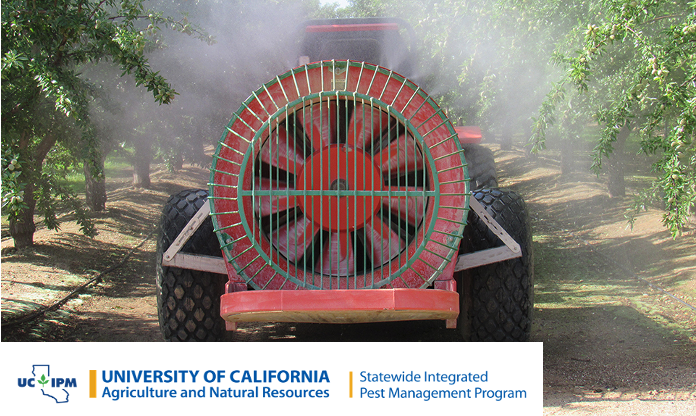

This course provides information on the basic principles of spray calibration, including application rate calculations, describes the components of a sprayer, and takes a look at how droplet size, nozzle type, and weather conditions influence drift and spray coverage. Also covered are conditions for pesticide applications under the 2018 Pesticide Use Near Schoolsites regulation. This course is available for free. The authors of the course are Lynn Wunderlich, UCCE Farm Advisor Amador, Calaveras, El Dorado, and Tuolumne Counties and Dr. Franz Niederholzer, UCCE Farm Advisor Colusa County.
Who should enroll?
Anyone who works with air blast sprayers or is involved with ensuring successful pesticide applications in trees and vines. This includes pesticide handlers, pest control advisers, growers, and supervisors.
Continuing education units
California Department of Pesticide Regulation (1.0 hour Laws & Regulations and 1.5 hours Other) and Certified Crop Adviser (2.0 IPM).
Enrollment period
- For assistance with login, course enrollment, or payment, contact campushelp@extension.org.
- For assistance with progress through the course or certificate, contact UCIPMcourses@ucanr.edu.
- Technical support: UC IPM Online Training Support
In this program, Extension Professionals, local officials, citizen advocates, non-profit groups, government agencies and general public, including those who are interested in the basic concepts of public land use and development regulation and in the best practices of community development and smart growth will learn to make positive land use decisions for their communities regarding zoning regulation, best practices for planning and zoning, and sustainable community planning.
Each units is designed to help students learn the core tasks of being a Planning Official.
In order to offer this online learning opportunity and maintain consistency between the classroom course and the online units, each unit includes content equal to or more than what is provided in the classroom sessions. Each unit is designed to take between 45 minutes to an hour. However, you can stop and restart a unit at your convenience.
For more information contact Daniel Walker at walke422@purdue.edu.
This course is available for a fee of $200 as part of a bundle that includes ACP-Indiana 101, 201, and Comprehensive Exam. To purchase this bundle of courses, click the following button.
- Teacher: Daniel Earl Walker
American Citizen Planner - Indiana 201 is an online course which will provide an in-depth look at land use planning and zoning along with management and ethics case studies and best practices.
For more information contact Daniel Walker at walke422@purdue.edu.
This course is available for a fee of $200 as part of a bundle that includes ACP-Indiana 101, 201, and Comprehensive Exam. To purchase this bundle of courses, click the following button.
- Teacher: Daniel Earl Walker
American Citizen Planner - Indiana Comprehensive Exam is an online exam and certificate course.
For more information contact Daniel Walker at walke422@purdue.edu.
This course is available for a fee of $200 as part of a bundle that includes ACP-Indiana 101, 201, and Comprehensive Exam. To purchase this bundle of courses, click the following button.
- Teacher: Daniel Earl Walker
In this program, Extension Professionals, local officials, citizen advocates, non-profit groups, government agencies and general public, including those who are interested in the basic concepts of public land use and development regulation and in the best practices of community development and smart growth will learn to make positive land use decisions for their communities regarding zoning regulation, best practices for planning and zoning, and sustainable community planning.
Each units is designed to help students learn the core tasks of being a Planning Official.
In order to offer this online learning opportunity and maintain consistency between the classroom course and the online units, each unit includes content equal to or more than what is provided in the classroom sessions. Each unit is designed to take between 45 minutes to an hour. However, you can stop and restart a unit at your convenience.
For more information contact Kara Salazar (salazark@purdue.edu).
The fee for this course $100. To purchase and enroll in the course, click the following button:
- Teacher: Kelsey Johnson
- Teacher: Brad Neumann
- Teacher: Rebecca Roberts
- Teacher: Kara Salazar
- Teacher: Gwyn Shelle
- Teacher: Daniel Earl Walker
American Citizen Planner 201 is an online course which will provide an in-depth look at land use planning and zoning along with management and ethics case studies and best practices.
For more information contact Kara Salazar (salazark@purdue.edu).
The fee for this course is $100. To purchase and enroll in the course, click the following button:
- Teacher: Kelsey Johnson
- Teacher: Brad Neumann
- Teacher: Kara Salazar
- Teacher: Gwyn Shelle
- Teacher: Daniel Earl Walker
Each units is designed to help students learn the core tasks of being a Planning Official.
In order to offer this online learning opportunity and maintain consistency between the classroom course and the online units, each unit includes content equal to or more than what is provided in the classroom sessions. Each unit is designed to take between 45 minutes to an hour. However, you can stop and restart a unit at your convenience.
For more information, contact Kara Salazar (salazark@purdue.edu)
The fee for the full series (101, 201, Exam) is $200. Click this button to purchase and enroll in this series of courses:
- Teacher: Kelsey Johnson
- Teacher: Brad Neumann
- Teacher: Kara Salazar
- Teacher: Gwyn Shelle
- Teacher: Daniel Earl Walker
Our Vision is a healthier world through environmental stewardship.
Our Mission is to support the University of Maryland Extension mission by educating residents about safe, effective and sustainable horticultural practices that build healthy gardens, landscapes, and communities.
Our History
The UME Master Gardener Program began in 1978 as a means to extend science-based knowledge to the general public by providing horticultural and pest management expertise to help protect and improve Maryland’s natural resources. Today, this popular program can be found in 20 Maryland counties and Baltimore City.
UME Master Gardeners are volunteers who combine their love of plants, people, and the environment to help residents in their communities solve problems and make environmentally-sound decisions.
Timeline of classes will be every Wednesday night 6-8PM from September 3rd until November 19th at the Anne Arundel County Extension Office, 97 Dairy Lane, Gambrills, MD 21054. We will be covering topics such as Entomology and Invasive Insects, Plant Pathology, Botany, Integrated Pest Management, Soil Science, Plant Nutrition, Ecology, Bay-Wise and Conservation Landscaping, Vegetables, Native Plants, and Plant Identification. Students will need to complete one module and quiz a week and attend the in-person class.
- Teacher: Maxine Da-Som Yoon
Tuesday evening class sessions | Live via Zoom
January 19, 26 and February 2, 9, 16, & 23
6:00 - 9:00 pm PST
- Teacher: Colette DePhelps
- Instructor: Cheyanne Myers
- Instructor: Jen Werlin

Course overview
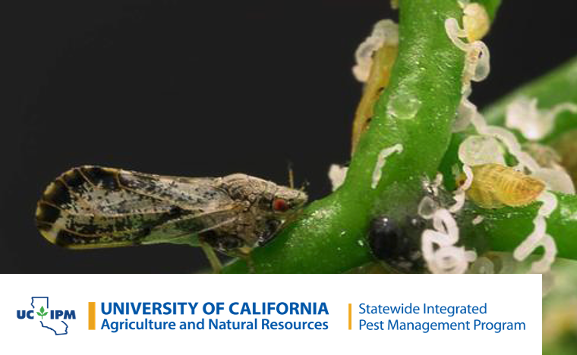
This course provides information on limiting psyllid infestations in gardens and landscapes and minimizing their role in psyllid and disease spread. This includes understanding the biology of the insect and disease, how to look for each of them, existing control strategies, and best management practices in urban settings.
This course was authored by Dr. Beth Grafton-Cardwell (UCCE Emerita Entomology Specialist).
Who should enroll?
Homeowners and gardeners
This course has not been approved for Continuing Education Units.
- Technical support: UC IPM Online Training Support

Course overview
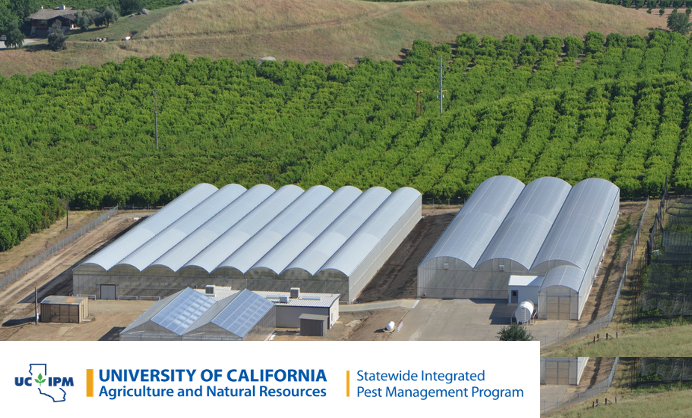
This course provides information to retail nursery and garden center personnel to limit psyllid infestations in these environments and minimize their role in psyllid and disease spread. This includes understanding the biology of the insect and disease, how to look for each of them, existing control strategies, and best management practices in a nursery setting.
Who should enroll?
Retail nursery and garden center personnel
This course has not been approved for Continuing Education Units.
- Technical support: UC IPM Online Training Support
Course Name: AT001-Solar Photovoltaic (PV) Technology Basics
This course will cover how solar photovoltaic energy systems work focusing on what takes place within the solar PV cell and how electricity is produced. The type of electrical current and electrical terms and definitions commonly used in the solar energy industry including power, watts, voltage, current, and resistance are presented. Questions? Contact Dr. Edward Franklin at uafrank0@arizona.edu.
The course contains video so it requires a computer that can play audio and video.
- Teacher: Jody Dean
- Teacher: Don Dinwiddie
- Teacher: Robert Masson
Course Name: AT001B-Solar PV Basics: Load Analysis
This course is the second installment in the class AT001 - Solar Photovoltaic Basics. This class teaches you how to calculate the size required for solar systems by analyzing the load of the devices you plan to operate.
The course contains video so it requires a computer that can play audio and video.
- Teacher: Jody Dean
- Teacher: Don Dinwiddie
- Teacher: Robert Masson
Avian Influenza Biosecurity for Emergency Responders is a self-directed certification course designed for emergency response personnel. Participants will gain vital information on bio-security measures and emergency management procedures that are necessary to prevent, contain, and recover an avian influenza outbreak. For more information contact Nathaniel Tablante, University of Maryland at nlt@umd.edu.
- Teacher: Brett Kreifels
For more information about this course contact Nathaniel Tablante, University of Maryland at nlt@umd.edu.
- Teacher: Brett Kreifels
The Vermont Backyard Woods Course is designed for homeowners with less than 25 acres who want to learn more about the woods in their backyard: what’s in it, who (wildlife) uses it, and how they can become better caretakers of it.
The course explores the following themes: An Introduction to Your Backyard and Beyond; Getting to Know Your Woods; Backyard Woods Projects; Developing a Backyard Woods Action Plan.
About the Course
- This is an introductory course, designed to give landowners basic skills and connect them to resources available.
- The self-paced course is hosted online and is composed of 4 sections. Each section has videos and activities that are to be completed on your own schedule.
- Participants will be invited to join drop-in webinar sessions with experts.
- There will be two optional in-person walks.
Who should join this course?
- Homeowners who own 5-25 acres.
- Homeowners who want to become more active stewards of their land, but don't know where to start.
- Homeowners who want to learn general ecology in Vermont.
By the end of the program participants will:
- Understand why their backyard woods matter, the benefits it provides, and how it contributes to Vermont’s forest landscape.
- Identify natural history and cultural features in their backyard woods.
- Identify and rank stewardship goals and objectives for their property.
- Develop a stewardship action plan with a project schedule and plan for implementing stewardship activities.
- Increase awareness and connection to resources and organizations available to assist landowners in post-course activities.
Questions?
Contact Gwen Kozlowski at gwen.kozlowski@uvm.edu or 802-651-8343
- Teacher: Gwen Kozlowski
Knowing general information about horse welfare, behavior, nutrition, health and regulations is essential to keeping your horse happy and healthy. This learning module gives an overview of the care and management of horses, with information ranging from daily health checks to management & control of diseases and parasites.
For information contact Colleen Brady, at bradyc@purdue.edu.
The fee for this course is $10. To purchase and enroll in the course, click the following button:
If you purchase at least $40 worth of courses from this category, you can receive a 20% discount by entering the voucher code of HorseQuest20.
- Teacher: Kathy Anderson
- Teacher: Colleen Brady
Basic Radio 101 for North Dakota Emergency Responders is a self-directed course for paid and volunteer people who serve in EMS, law enforcement, firefighting and other first responder activities. Participants will learn how to use their radios appropriately, protocols to follow and how to troubleshoot common problems. For more information, contact Brenda Vossler, N.D. Department of Emergency Services training and exercise officer, at (701) 328-8106 or blvossler@nd.gov. For technical support, contact Becky Koch, (701) 231-7875 or becky.koch@ndsu.edu, with North Dakota State University Agriculture Communication.
- Teacher: Becky Koch
For more information contact Kathy Anderson, University of Nebraska, at kanderson1@unl.edu
The fee for this course is $10. To purchase and enroll in it, click the button below:
If you purchase at least $40 worth of courses from this category, you can receive a 20% discount by entering the voucher code of HorseQuest20.
- Teacher: Kathy Anderson
- Teacher: Colleen Brady
Este curso en
línea está dirigido a proveedores de cuidado infantil. Esta curso que dura 30
minutos es una manera divertida e interactiva de conocer las últimas
recomendaciones para niños sobre bebidas saludables y ayudar a los proveedores
de cuidado infantil a cumplir con los requisitos de la Ley de Bebidas
Saludables en el Cuidado Infantil de California (AB 2084). Este curso que dura
30 minutos, incluye videos, exámenes rápidos y actividades sobre temas como los
tipos de leche y jugos que se deben servir, el consumo seguro de agua potable y
como usar la información nutrimental de la etiqueta de los alimentos. El proveedor
recibirá un certificado de capacitación al completar el curso. El curso es
gratis para proveedores de cuidado infantil en California y tiene un costo de
$15 para proveedores de cuidado infantil fuera de California.
- Teacher: Danielle Lee