
Extension Foundation Online Campus
Search results: 454

In this course, you will explore motivational interviewing techniques through practical case studies focused on vaccination discussions.
This course is part of the Vaccine Education series created by Clemson University Cooperative Extension.
Other courses in this series include:- Getting Started: Vaccine Education Onboarding
- Vaccination as a Priority
- The Science of Vaccination
- The Critical Role of Extension Agents & Vaccine Education at the National Level
- Communication Strategies and Motivational Interviewing
- Neuromarketing Strategies for Brain-Friendly Health Messaging in Extension Outreach
- Health Media Literacy

- Teacher: Molly Immendorf
- Teacher: Lisa Linfield

In this course, you will learn how neuromarketing principles can transform your outreach.
This course is part of the Vaccine Education series created by Clemson University Cooperative Extension.
Other courses in this series include:- Getting Started: Vaccine Education Onboarding
- Vaccination as a Priority
- The Science of Vaccination
- The Critical Role of Extension Agents & Vaccine Education at the National Level
- Communication Strategies and Motivation Interviewing
- Motivational Interviewing Case Studies
- Health Media Literacy

- Teacher: Molly Immendorf
- Teacher: Lisa Linfield

In this course, you will learn how you can become vital contributors to vaccination education efforts by doing what you already do so well.
This course is part of the Vaccine Education series created by Clemson University Cooperative Extension.
Other courses in this series include:- Getting Started: Vaccine Education Onboarding
- Vaccination as a Priority
- The Science of Vaccination
- Communication Strategies and Motivation Interviewing
- Motivational Interviewing Case Studies
- Neuromarketing Strategies for Brain-Friendly Health Messaging in Extension Outreach
- Health Media Literacy

- Teacher: Molly Immendorf
- Teacher: Lisa Linfield

In this course, you will learn how vaccines work to protect individuals and communities, gain insights into the rigorous regulatory processes ensuring vaccine safety, and review evidence supporting vaccine effectiveness.
This course is part of the Vaccine Education series created by Clemson University Cooperative Extension.
Other courses in this series include:- Getting Started: Vaccine Education Onboarding
- Vaccination as a Priority
- The Critical Role of Extension Agents & Vaccine Education at the National Level
- Communication Strategies and Motivation Interviewing
- Motivational Interviewing Case Studies
- Neuromarketing Strategies for Brain-Friendly Health Messaging in Extension Outreach
- Health Media Literacy

- Teacher: Molly Immendorf
- Teacher: Lisa Linfield

In this course, you will learn about vaccine hesitancy, the significance of community immunity, and recent vaccination development.
This course is part of the Vaccine Education series created by Clemson University Cooperative Extension.
Other courses in this series include:- Getting Started: Vaccine Education Onboarding
- The Science of Vaccination
- The Critical Role of Extension Agents & Vaccine Education at the National Level
- Communication Strategies and Motivation Interviewing
- Motivational Interviewing Case Studies
- Neuromarketing Strategies for Brain-Friendly Health Messaging in Extension Outreach
- Health Media Literacy

- Teacher: Molly Immendorf
- Teacher: Lisa Linfield
This course will provide you with the necessary training to lead informative, science-driven conversations with adults to support their vaccine decision-making. You will learn why adults may question vaccines and the common impediments to vaccination. In addition, you will learn strategies to address vaccine questioning, recognize readiness, and build vaccine confidence.
- Teacher: Lisa Linfield
- Instructor: Ruth Hursman
- Instructor: Charlie Pane
Expanded Learning Opportunities: Experiential Learning is for Employees or Volunteers in Youth Serving Organizations. Participants will learn how children and youth in out-of-school settings reach their full potential as a result of positive youth/adult interactions, purposeful learning experiences, and safe environments.
Participants will be able to: identify experiential learning techniques, provide purposeful and directing teaching, and engage and energize youth so they are ready to learn.
For more information or to enroll contact:
- Elizabeth Janning, janning2@unl.edu with Nebraska Extension.
- LaDonna Werth, ladonna.werth@unl.edu with Nebraska Extension.
- Deb Weitzenkamp, dweitzenkamp2@unl.edu with Nebraska Extension.
- Teacher: Deborah Weitzenkamp
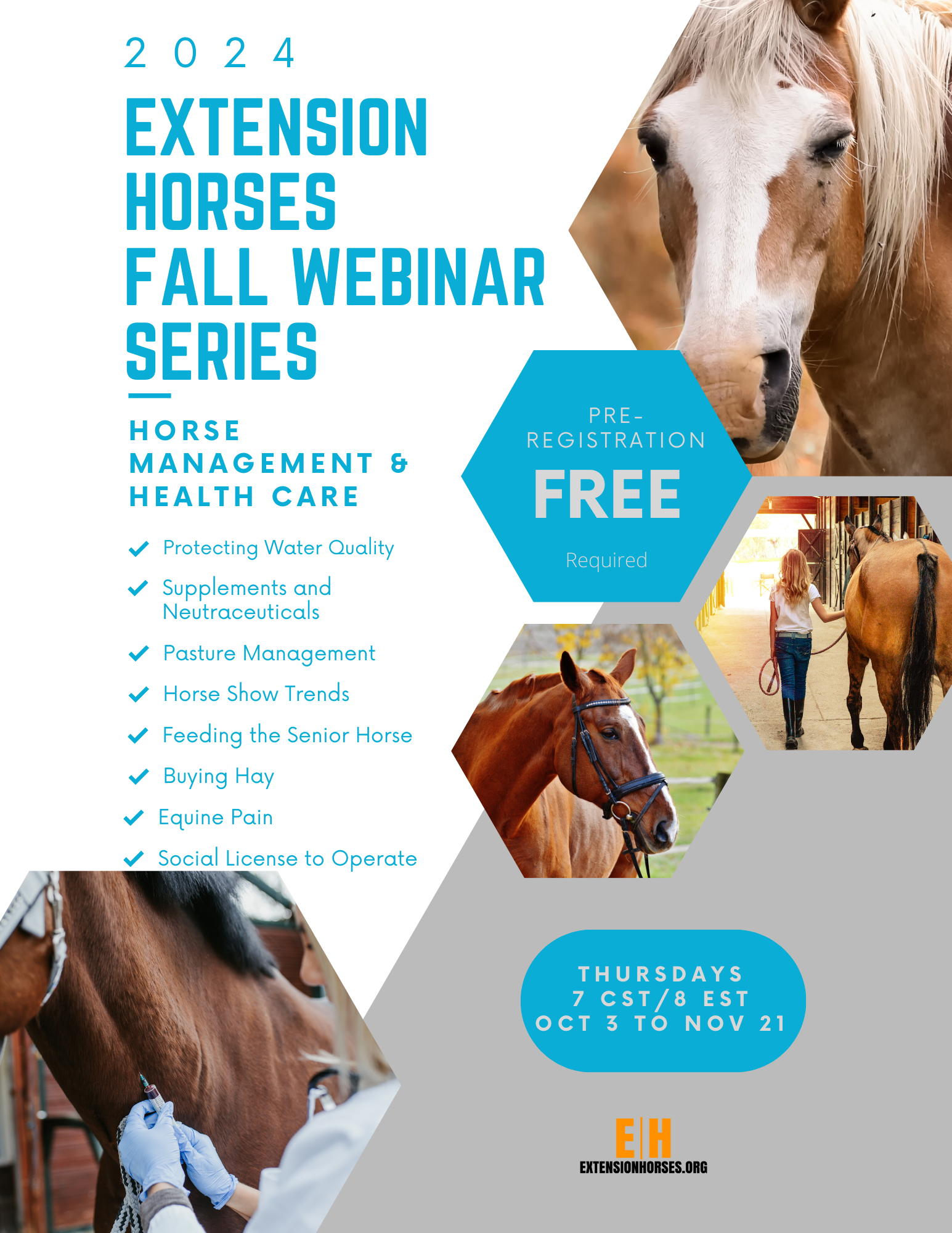
Extension Horses presents an 8 week webinar series to improve the lives of you and your horse. Experts from across the country will present live on Thursday evenings at 7 pm CST/ 8 EST.
Recordings will be uploaded for later viewing.
October 3 - Horse Show Trends - Dr. Kathy Anderson, University of Nebraska - Lincoln
October 10 - Hints for Horse Owners Buying Hay - Dr. Bob Coleman, University of Kentucky
October 17 - Protecting Water Quality - Laura Kenney, MS ,Penn State University
October 24 - Feeding the Senior Horse - Dr. Nettie Liburt, Liburt Nutritional Consulting
October 31 - Supplements, Dr. Carey Williams, Rutgers University
November 7 - Pain in the Equine - Dr. Kris Hiney, Oklahoma State University
November 14 - Social License to Operate - Dr. Colleen Brady, Purdue University
November 21 - Pasture Management - Robyn Stewart, MS, University of Georgia
- Teacher: Kathy Anderson
- Teacher: Colleen Brady
- Teacher: Kris Hiney
- Teacher: Laura Kenny

This course is designed as a resource for educators who are unexpectedly having to teach to remote learners during the COVID-19 outbreak. The design is a variety of individual lessons, covering a variety of topics related to horse care and management. It is designed more as a 'buffet' of choices than a course designed around a specific aspect of horse care and management. If you have any questions regarding the course, please contact Dr. Colleen Brady, bradyc@purdue.edu. For more free educational material, check out our YouTube channel.
- Teacher: Colleen Brady
The Cattle Feedyard Safety Program, through the Central States Center for Agricultural Safety and Health, Gallagher Insurance, Nebraska Extension and the Nebraska Cattlemen, has compiled safety modules that can be used by cattle producers to conduct safety trainings with their employees. The modules are based on the topics identified through surveys, insurance companies, and other safety and health experts. The top 15 employee safety topics identified have been labeled the Feedyard 15.
This training is intended for anyone new to agriculture, about to begin employment in agriculture outside of their family business or wishing to improve their current skills and knowledge. People of all ages find this set of lessons relevant.
Price for this course is $10.- Teacher: Deana Namuth-Covert
- Teacher: Aaron Yoder


Course Overview
The Financial Management Series for Volunteers is a comprehensive collection of online training modules designed to equip volunteers with essential financial management skills tailored specifically for the 4-H Youth Development Programs (YDP). Through this structured series, participants will gain the knowledge and tools necessary to ensure financial integrity, compliance, and effective resource utilization within their respective 4-H organizations.
The series includes:
- Module 1: Financial Management Fundamentals.
- Module 2: Bank Accounts & Signer Responsibilities.
- Module 3: Planning, Fundraising, and Resource Management.
- Module 4: Gifts, Scholarships, Special Considerations.
- Module 5: Annual Financial Reporting & Compliance.
- Module 6: Financial Responsibilities of 4-H Treasurer Advisors, Club Treasurers, VMO Treasurers, and VMO Finance Managers.
- Module 7: Excess Funds, Financial Processing, Disbursements, & Taxes.
Length
Each module is between 7 and 15 minutes with a total course time of approximately 75 minutes. Coursework can be completed over multiple sessions (you will have the option to resume where you left off).
Who Should Attend
California Adult Volunteers who have a financial role in the 4-H program such as Club Leaders, VMO Treasurers, Treasurer Advisors.
- Teacher: Zeva Cho
- Teacher: CA 4-H eXtension Tech Support
- Teacher: Scott Mautte
- Teacher: Gemma Miner
Finding Land to Farm in Idaho Short Course
Four Sessions
Are you a Land Seeker?
Perhaps you are returning from military service or changing careers. Maybe you have worked or apprenticed on farms or been inspired by urban agriculture or the local food movement. If you have a desire to find land to farm or ranch, the Finding Land to Farm short course is for you!
People learn best by doing! This 4-part short course takes a skills-based approach to teaching and learning that focuses on what people need to know and do to successfully find land to farm. In addition to live webinar-based class sessions, participants will have access to online classroom materials including activities and resources essential to making land tenure decisions.
Week 1: Introduction to Land Tenure Options
Week 2: Assessing Your Financial Position
Week 3: Finding and Assessing Farmland
Week 4: Ins and Outs of Leasing and Buying Land
The Finding Land to Farm curriculum “Farmland for the Next Generation” was developed by the American Farmland Trust, the Worldwide Instructional Design System and a team of 25 farming and land access experts from across the United States through grant from the U.S. Department of Agricultures Beginning Farmer and Rancher Development Program, Award # 2015-70017-23901.
For more information, please contact:
Colette DePhelps, University of Idaho Extension, cdephelps@uidaho.edu
- Teacher: Colette DePhelps
- Teacher: Mackenzie Lawrence
The audience for this course is:
The Florida Master Gardener
Volunteer Training Program prepares potential candidates to assist UF/IFAS
County Extension with outreach and educational in the areas of Horticulture,
Landscape Management, and Gardening. Sessions
are taught by UF/IFAS Agents and Specialists and will cover challenges that
come with living and gardening in the Florida.
Upon Successful completion of this training, participants will be able to:
- Explain the role of UF/IFAS Extension, Extension Agents, and Master Gardeners.
- Define EDIS and search it for reference materials.
- Identify common weeds, invasive plants, and common pest insects
- Distinguish differences between different plant pathogens and common nutrient deficiencies
- List the 9 Principles of Florida Friendly Landscaping™
- Provide 5 major concepts that are needed when planning and designing a landscape or garden.
- Demonstrate proper best practices for plant propagation, tree care, and fruit and Vegetable Gardening
- Synthesize learned material to provide researched based and informed guidance to Extension Clients via verbal or online communication
For more information or to enroll please contact:
Julio Perez
Commercial and Residential Horticulture Agent I
UF/IFAS Extension Putnam County
pjulio@ufl.edu
Mimi Vreeland
Residential Horticulture Agent I
UF/IFAS Extension Flagler County
mvreeland@ufl.edu
- Teacher: Julio Perez
This course includes lessons on preserving food by drying, freezing, pressure canning, and water bath canning various foods.
- Teacher: Ada Erlandson
- Teacher: Julie Garden-Robinson
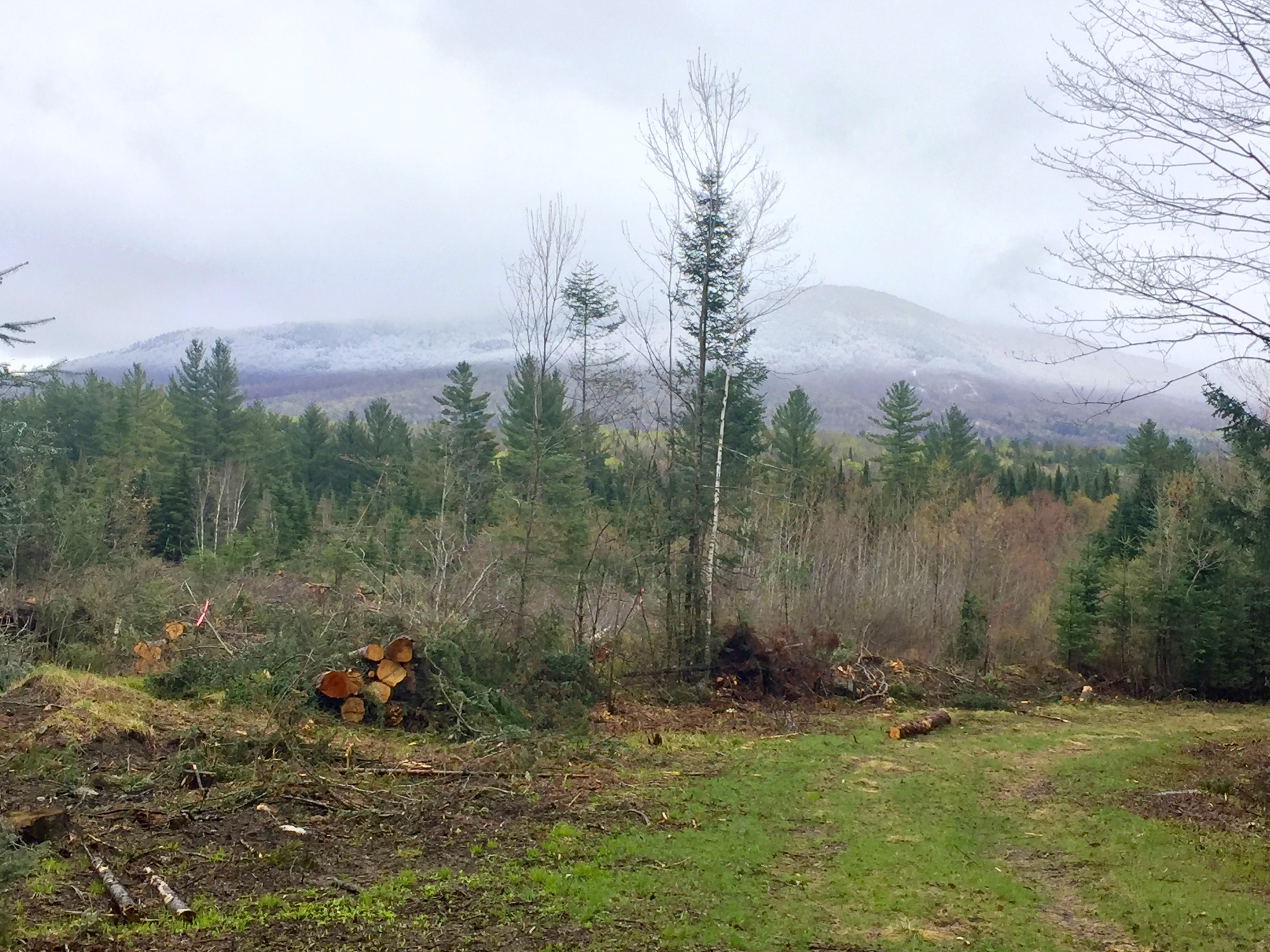
This course encompasses all of the presentations from the 2023 NER.COFE Workshop. Each topic corresponds to each of the individual presentations and are approved for Category 1 Forester Licensing credits by both SAF and the State of Maine as described with each course.
The cost for each topic is $10.00/0.5 CEU which is to cover recording, processing, and online fees, and will continue to support the NER.COFE organization as the in-person workshop does.
Any questions may be forwarded to:
Ray Berthiaume, NER.COFE Chair, UNH Cooperative Extension Field Specialist, Coos County Forester
- Teacher: Raymond Berthiaume
- Teacher: andrew fast
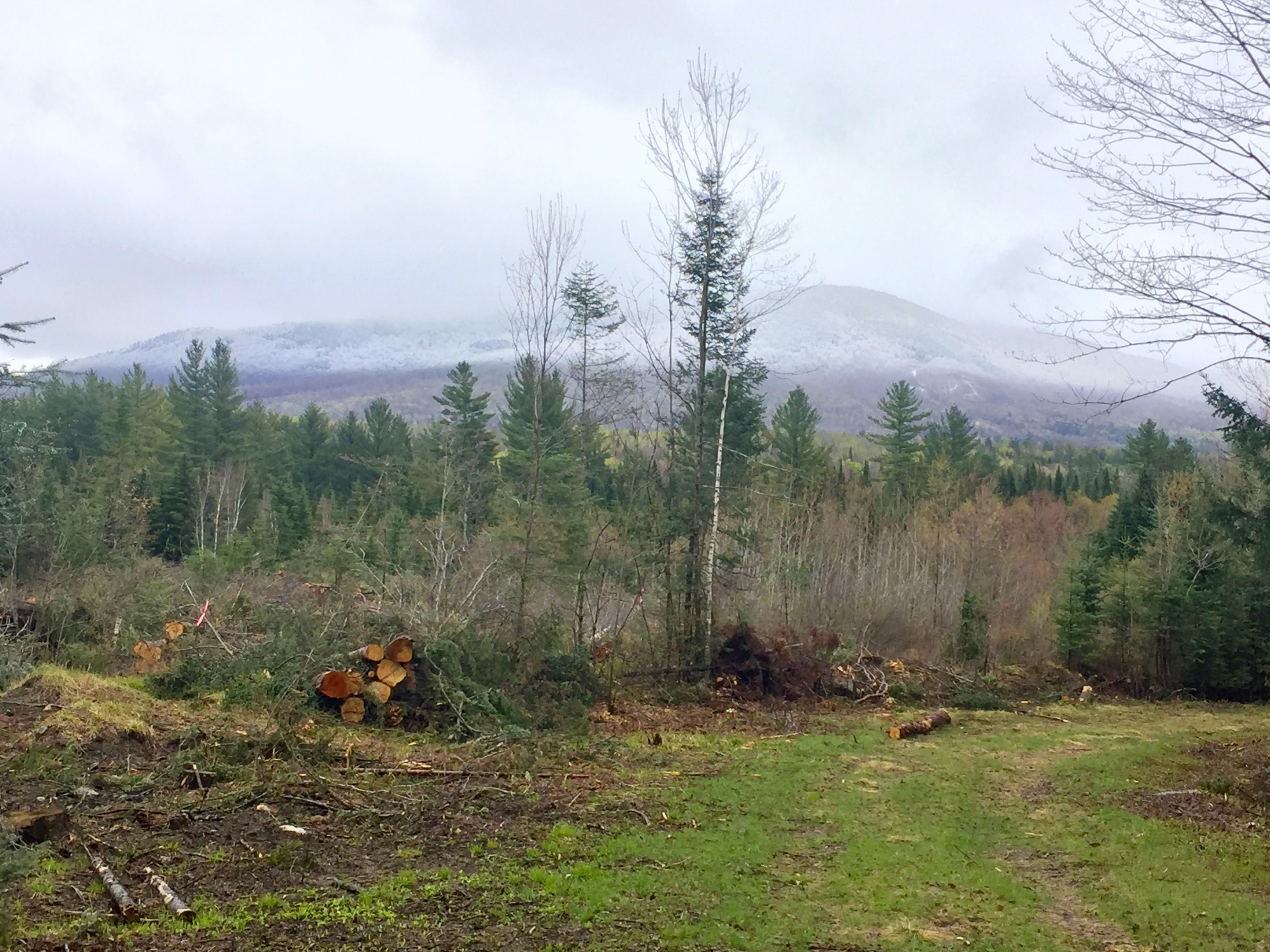
Speaker: Ivan Fernandez-Distinguished Maine Professor, University of Maine, School of Forest Resources and Climate Change Institute
A discussion of how we are developing adaptation strategies for managing ecosystem response to climate change, particularly as it relates to forested ecosytems and the freshwater resources they encompass.
0.5 Category 1 CEU; $10.00
- Teacher: Raymond Berthiaume
- Teacher: andrew fast
Speaker: Charlie Levesque-Innovative Natural Resource Solutions, LLC
A discussion of the basics of forest carbon and what it might mean in future years for the forest industry. Specifically: how do forests capture and store carbon, how does the forest carbon market work, how might forest carbon programs impact timber harvesting, how do landowners access these programs, what does all this mean for managing our forests.
1.5 Category 1 CEUs; $30.00
- Teacher: Raymond Berthiaume
- Teacher: andrew fast
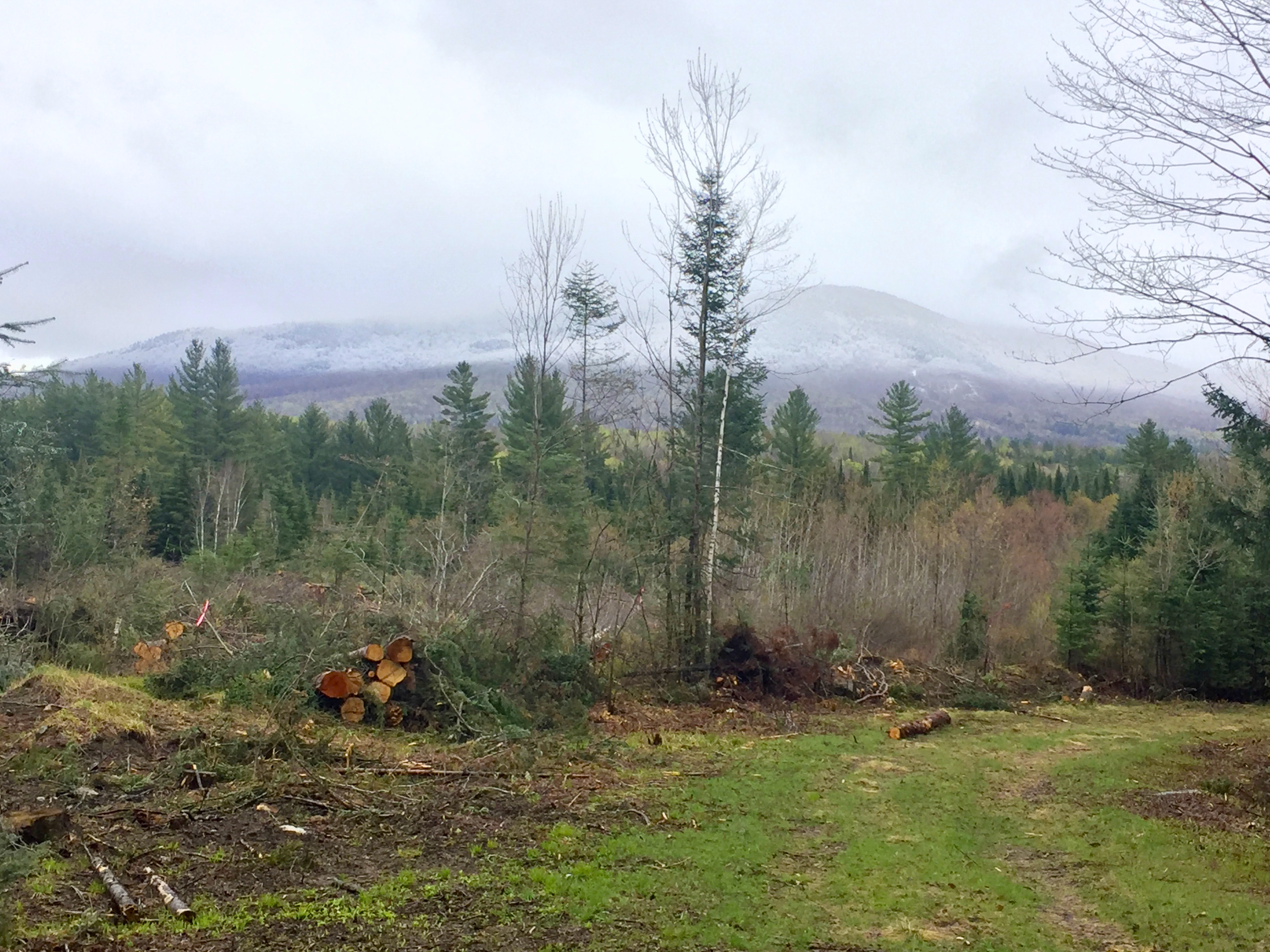
Speaker: Alison Kanoti-Maine Forest Service
An update on what forest pests and diseases are still a threat to the health and vigor of our forests, and ideas on how to manage for them.
0.5 Category 1 CEU from State of Maine
1.0 Category 1 CEU from SAF
$10.00
- Teacher: Raymond Berthiaume
- Teacher: andrew fast
Speaker: Stephen Nicholas-Maine Forest Service
A walk-through of the new system, including how to access and what the requirements are.
0.5 Category 1 CEU; $10.00
- Teacher: Raymond Berthiaume
- Teacher: andrew fast
Speaker: Amanda Lind-Technical Content Writer, Blue Marble Geographics
An explanation and demonstration how to use available software as a tool for foresters.
0.5 Category 1 CEU; $10.00
- Teacher: Raymond Berthiaume
- Teacher: andrew fast
Speaker: Jeremy Miller-Regional Technical Manager, American Forest Management
A case study of actual use of the software in forestry on-the-ground applications.
0.5 Category 1 CEU; $10.00
- Teacher: Raymond Berthiaume
- Teacher: andrew fast
Speaker: Claire Kiedrowski-Executive Director, Maine Library of Geographic Information
A discussion about what LiDAR data is available to foresters, wher, and how to find and access it.
0.5 Category 1 CEU; $10.00
- Teacher: Raymond Berthiaume
- Teacher: andrew fast
Speaker: Joel Slate-Corporate Director of Fiber Supply ND Paper
Discussion of markets for low-grade forest products and resources to support them.
0.5 Category 1 CEU; $10.00
- Teacher: Raymond Berthiaume
- Teacher: andrew fast
Speaker: Mark Anderson-The Nature Conservancy
A discussion about the project and how it is being implemented in Maine with multiple partners and supporters.
1.0 Category 1 CEU; $20.00
- Teacher: Raymond Berthiaume
- Teacher: andrew fast
Speaker: Amanda Lind-Technical Content Writer, Blue Marble Geographics
An explanation and demonstration how to use available software as a tool for foresters.
0.5 Category 1 CEU; $10.00
- Teacher: Raymond Berthiaume
- Teacher: andrew fast
Forest Farming Online is designed to train technical service providers (e.g., service foresters with government agencies, Extension professionals, forest management consultants), but is freely available to the public. This course begins with one introductory module, which you must complete first. It includes information pertaining to the basics of forest farming and takes approximately one hour to complete. A series of video and webinar clips from the coalition’s YouTube and webinar library have been compiled to present key forest farming considerations such as, what is it?, how do you do it?, what crops are popular?, how do you add value?, etc. Questions are included for you to complete along the way. Module 1 is expected to take approximately one hour to complete and it guides users to videos that follow a specific list of topics in the curriculum. Questions are linked to specific videos or video segments within topics in the outline. You should plan on spending about 20 minutes per topic.
For more information contact:
John Munsell, Virginia Tech/Virginia Cooperative Extension, jfmunsel@vt.edu
Brent Peterson SREF/UGA, bpeterson@sref.info
William Hubbard SREF/UGA whubbard@sref.info
- Teacher: Leslie Boby
Listen to an update on current and projected forest markets.
0.5 Category 1 ceu; $10
- Teacher: Raymond Berthiaume
Listen to some of the items being presented and discussed on the floor of the state legislature.
0.5 Category 1 ceu; $10
- Teacher: Raymond Berthiaume
Discuss how the changing climate, and associated weather events,
have changed the design and management of stream crossings.
0.5 Category 1 ceu; $10
- Teacher: Raymond Berthiaume

Descripción General del Curso
La formación anual para voluntarios de la Universidad de Agricultura y Recursos Naturales de California (UC ANR) es un recurso necesario para los voluntarios adultos que trabajan con menores. En este curso, usted aprenderá las directrices de CANRA, el Modelo Thriving para el Desarrollo Positivo de la Juventud, y la Supervisión 2-Deep. Estas sesiones están diseñadas para proporcionar importantes estrategias de prevención y denuncia para mantener seguros a los jóvenes en todos nuestros programas.
Duración
55 minutos (puede completarse en varias sesiones)
- CANRA para voluntarios - 30 minutos
- Modelo próspero de PYD de 4-H - 15 minutos
- Supervisión doble en profundidad - 5 minutos
Quién Debe Asistir
Todos los voluntarios de UC ANR que trabajen con menores en todo el sistema que estén fuera del Programa de Desarrollo Juvenil 4-H.
- Course Owner: CA 4-H eXtension Tech Support
- Course Owner: Scott Mautte