
Extension Foundation Online Campus
Search results: 540
The Occasional Quantity Cooks training helps CSU extension volunteers & staff prepare as they plan for, prepare and deliver food for a one-time event in their county. They take the pre-test before they begin the class and then take the post-test at the end. A certificate of completion is generated to give to their supervisor as verification that they have completed the training.
- Teacher: Nicole Arnold
- Teacher: Jonathan Gladden
- Teacher: Kate Shumaker
Ohio State University Extension Occasional Quantity Cooks training helps extension volunteers prepare as they plan for, prepare and deliver food for a one-time event in their county. Participants take the pre-test before they begin the program and then take the post-test at the end. A certificate of completion is generated to give to their County Educator/supervisor as verification that they have completed the training.
- Teacher: Nicole Arnold
- Teacher: Jonathan Gladden
- Teacher: Kate Shumaker

The Cattle Feedyard Safety Program, through the Central States Center for Agricultural Safety and Health, Gallagher Insurance, Nebraska Extension and the Nebraska Cattlemen, has compiled safety modules that can be used by cattle producers to conduct safety trainings with their employees. The modules are based on the topics identified through surveys, insurance companies, and other safety and health experts. The top 15 employee safety topics identified have been labeled the Feedyard 15.
This training is intended for anyone new to agriculture, about to begin employment in agriculture outside of their family business or wishing to improve their current skills and knowledge. People of all ages find this set of lessons relevant.
Price for this course is $10.- Teacher: Deana Namuth-Covert
- Teacher: Aaron Yoder

This short course offers a comprehensive overview of fiber hemp production through research-based production strategies and demonstrations of practical skills. Class sessions will feature presentations from farmers, field researchers, and industry experts. The curriculum topics will primarily focus on best agronomic practices in hemp production.
- Teacher: Heather Darby
- Teacher: Shannon MacDonald
- Teacher: Laura Sullivan
This four-part, asynchronous learning module was created by the Military Families Learning Network’s Early Intervention team. The interactive course focuses on the rights of young children with disabilities in military families, eligibility for special education programs and services for children with disabilities available within military systems, and strategies to support military families as they navigate these systems in military contexts.


Course Overview
The Financial Management Series for Volunteers is a comprehensive collection of online training modules designed to equip volunteers with essential financial management skills tailored specifically for the 4-H Youth Development Programs (YDP). Through this structured series, participants will gain the knowledge and tools necessary to ensure financial integrity, compliance, and effective resource utilization within their respective 4-H organizations.
The series includes:
- Module 1: Financial Management Fundamentals.
- Module 2: Bank Accounts & Signer Responsibilities.
- Module 3: Planning, Fundraising, and Resource Management.
- Module 4: Gifts, Scholarships, Special Considerations.
- Module 5: Annual Financial Reporting & Compliance.
- Module 6: Financial Responsibilities of 4-H Treasurer Advisors, Club Treasurers, VMO Treasurers, and VMO Finance Managers.
- Module 7: Excess Funds, Financial Processing, Disbursements, & Taxes.
Length
Each module is between 7 and 15 minutes with a total course time of approximately 75 minutes. Coursework can be completed over multiple sessions (you will have the option to resume where you left off).
Who Should Attend
California Adult Volunteers who have a financial role in the 4-H program such as Club Leaders, VMO Treasurers, Treasurer Advisors.
- Teacher: CA 4-H Campus Tech Support
- Teacher: Zeva Cho
- Teacher: Scott Mautte
- Teacher: Gemma Miner
Finding Land to Farm in Idaho Short Course
Four Sessions
Are you a Land Seeker?
Perhaps you are returning from military service or changing careers. Maybe you have worked or apprenticed on farms or been inspired by urban agriculture or the local food movement. If you have a desire to find land to farm or ranch, the Finding Land to Farm short course is for you!
People learn best by doing! This 4-part short course takes a skills-based approach to teaching and learning that focuses on what people need to know and do to successfully find land to farm. In addition to live webinar-based class sessions, participants will have access to online classroom materials including activities and resources essential to making land tenure decisions.
Week 1: Introduction to Land Tenure Options
Week 2: Assessing Your Financial Position
Week 3: Finding and Assessing Farmland
Week 4: Ins and Outs of Leasing and Buying Land
The Finding Land to Farm curriculum “Farmland for the Next Generation” was developed by the American Farmland Trust, the Worldwide Instructional Design System and a team of 25 farming and land access experts from across the United States through grant from the U.S. Department of Agricultures Beginning Farmer and Rancher Development Program, Award # 2015-70017-23901.
For more information, please contact:
Colette DePhelps, University of Idaho Extension, cdephelps@uidaho.edu
- Teacher: Colette DePhelps
- Teacher: Mackenzie Lawrence
This is a video-based series course. Through watching and following along with the videos, viewers will increase their knowledge about nutritional value of trout and food safety guidelines. Viewers will gain skills to engage with their children in the kitchen and at mealtime. Viewers will gain cooking skills related to cooking trout and increase confidence in their abilities to cook trout.
- Teacher: Erin Doty
- Teacher: Hannah Kindelspire
- Teacher: Annie Roe
The audience for this course is:
The Florida Master Gardener
Volunteer Training Program prepares potential candidates to assist UF/IFAS
County Extension with outreach and educational in the areas of Horticulture,
Landscape Management, and Gardening. Sessions
are taught by UF/IFAS Agents and Specialists and will cover challenges that
come with living and gardening in the Florida.
Upon Successful completion of this training, participants will be able to:
- Explain the role of UF/IFAS Extension, Extension Agents, and Master Gardeners.
- Define EDIS and search it for reference materials.
- Identify common weeds, invasive plants, and common pest insects
- Distinguish differences between different plant pathogens and common nutrient deficiencies
- List the 9 Principles of Florida Friendly Landscaping™
- Provide 5 major concepts that are needed when planning and designing a landscape or garden.
- Demonstrate proper best practices for plant propagation, tree care, and fruit and Vegetable Gardening
- Synthesize learned material to provide researched based and informed guidance to Extension Clients via verbal or online communication
For more information or to enroll please contact:
Julio Perez
Commercial and Residential Horticulture Agent I
UF/IFAS Extension Putnam County
pjulio@ufl.edu
Mimi Vreeland
Residential Horticulture Agent I
UF/IFAS Extension Flagler County
mvreeland@ufl.edu
- Teacher: Julio Perez
Speaker: Ivan Fernandez-Distinguished Maine Professor, University of Maine, School of Forest Resources and Climate Change Institute
A discussion of how we are developing adaptation strategies for managing ecosystem response to climate change, particularly as it relates to forested ecosytems and the freshwater resources they encompass.
0.5 Category 1 CEU; $10.00
- Teacher: Raymond Berthiaume
- Teacher: andrew fast
Speaker: Charlie Levesque-Innovative Natural Resource Solutions, LLC
A discussion of the basics of forest carbon and what it might mean in future years for the forest industry. Specifically: how do forests capture and store carbon, how does the forest carbon market work, how might forest carbon programs impact timber harvesting, how do landowners access these programs, what does all this mean for managing our forests.
1.5 Category 1 CEUs; $30.00
- Teacher: Raymond Berthiaume
- Teacher: andrew fast
Speaker: Stephen Nicholas-Maine Forest Service
A walk-through of the new system, including how to access and what the requirements are.
0.5 Category 1 CEU; $10.00
- Teacher: Raymond Berthiaume
- Teacher: andrew fast
Speaker: Amanda Lind-Technical Content Writer, Blue Marble Geographics
An explanation and demonstration how to use available software as a tool for foresters.
0.5 Category 1 CEU; $10.00
- Teacher: Raymond Berthiaume
- Teacher: andrew fast
Speaker: Claire Kiedrowski-Executive Director, Maine Library of Geographic Information
A discussion about what LiDAR data is available to foresters, wher, and how to find and access it.
0.5 Category 1 CEU; $10.00
- Teacher: Raymond Berthiaume
- Teacher: andrew fast
Speaker: Joel Slate-Corporate Director of Fiber Supply ND Paper
Discussion of markets for low-grade forest products and resources to support them.
0.5 Category 1 CEU; $10.00
- Teacher: Raymond Berthiaume
- Teacher: andrew fast
Speaker: Mark Anderson-The Nature Conservancy
A discussion about the project and how it is being implemented in Maine with multiple partners and supporters.
1.0 Category 1 CEU; $20.00
- Teacher: Raymond Berthiaume
- Teacher: andrew fast
Speaker: Amanda Lind-Technical Content Writer, Blue Marble Geographics
An explanation and demonstration how to use available software as a tool for foresters.
0.5 Category 1 CEU; $10.00
- Teacher: Raymond Berthiaume
- Teacher: andrew fast
Forest Farming Online is designed to train technical service providers (e.g., service foresters with government agencies, Extension professionals, forest management consultants), but is freely available to the public. This course begins with one introductory module, which you must complete first. It includes information pertaining to the basics of forest farming and takes approximately one hour to complete. A series of video and webinar clips from the coalition’s YouTube and webinar library have been compiled to present key forest farming considerations such as, what is it?, how do you do it?, what crops are popular?, how do you add value?, etc. Questions are included for you to complete along the way. Module 1 is expected to take approximately one hour to complete and it guides users to videos that follow a specific list of topics in the curriculum. Questions are linked to specific videos or video segments within topics in the outline. You should plan on spending about 20 minutes per topic.
For more information contact:
John Munsell, Virginia Tech/Virginia Cooperative Extension, jfmunsel@vt.edu
Brent Peterson SREF/UGA, bpeterson@sref.info
William Hubbard SREF/UGA whubbard@sref.info
- Teacher: Leslie Boby
Listen to some of the items being presented and discussed on the floor of the state legislature.
0.5 Category 1 ceu; $10
- Teacher: Raymond Berthiaume
This branding short course is designed to help small farm, ranch and food businesses clarify, create and confidently use their brand. Participants will learning what branding truly means beyond just a logo, discover how to choose colors, fonts, and visuals that reflect their mission, and gain clear guidance on applying their branding consistently across digital marketing platforms, print materials, packaging, and product labeling within regulatory guidelines.
- Teacher: Colette DePhelps
- Instructor: Kate Wood
From Scraps to Soil: Vermont Composting Short Course
This course offers an in-depth study of backyard and community-level composting. It covers the many ways to turn food scraps and yard trimmings into nutrient-rich compost. It is offered by the University of Vermont Extension Community Horticulture Program with funding support from the Vermont Agency of Natural Resources. Registration for the 2026 course is now closed. See our program website for more information.
- Teacher: Debra Heleba
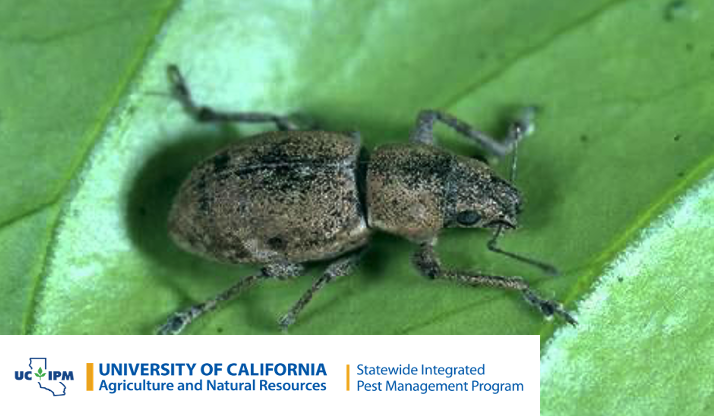

This course covers the life cycle of Fuller rose beetle, Naupactus godmani, its natural enemies, how to survey for it, why it is of significance for export countries, and how to manage the pest using a systems approach. This course is available for free for those who do not need Continuing Education Units. The author of the course is Dr. Elizabeth Grafton-Cardwell (UCCE Emerita Entomology Specialist).
To get the Continuing Education Units certificate you will be charged a fee of $20. To encourage taking the course earlier in the year, we offer 50% off the regular price from January through October 31st – use the code ipm50 at checkout. You must download the certificate (PDF file) to receive your CEU credits.
- Technical support: UC IPM Online Training Support
Course must be completed and certificate downloaded before December 30 of the current year.
To access the free version of this course without a certificate, click on the title below:
Fuller Rose Beetle
- Technical support: UC IPM Online Training Support
Fundamentals of Agricultural Credit Analysis is a self directed course for beginning agricultural lenders and beginning farmers. In this course participants will learn how to analyze financial statements to make credit decisions. In addition, the farmer will learn how to use financial statements to make better management decisions.
For more information on this course or to enroll please contact: Ryan Larsen at ryan.larsen@ndsu.edu
- Teacher: Ryan Larsen
Fundamentals of Agricultural Credit Analysis is a self directed course for beginning agricultural lenders and beginning farmers. In this course participants will learn how to analyze financial statements to make credit decisions. In addition, the farmer will learn how to use financial statements to make better management decisions.
For more information on this course or to enroll please contact: Ryan Larsen at ryan.larsen@ndsu.edu
- Teacher: Ryan Larsen
This online course consists of six units which address various topics relevant to municipal government in Montana. Each unit contains required reading, a discussion forum, and a quiz. It is anticipated that participants will complete each unit in approximately two hours for a total of 12 credited Institute hours.
For more information or to enroll please contact: Lydia Maunz, lydia.maunz@montana.edu, at Montana State University.- Teacher: Schuyler Germann
- Teacher: Ashley Kent
- Teacher: Lydia Maunz
- Teacher: Kate Wade


Descripción general del curso
El curso «Fundamentos para acompañantes en eventos con pernoctación» de la Oficina Estatal de 4-H de California prepara a los voluntarios adultos para apoyar a los jóvenes en eventos con pernoctación. Se centra en la seguridad, el bienestar y el desarrollo positivo de los jóvenes, utilizando la «Filosofía del pez» como guía para un enfoque positivo en el acompañamiento.
Duración
Aproximadamente 25 minutos (se puede completar en varias sesiones)
A quién va dirigido
OBLIGATORIO: Todos los acompañantes que asistan a eventos nocturnos estatales y nacionales patrocinados por la Oficina Estatal de 4-H.
RECOMENDADO: Todos los acompañantes que asistan a cualquier evento nocturno de 4-H. Los requisitos finales los establece el personal del condado.
Este curso complementa, pero no sustituye, la formación específica para cada evento.
Beneficios
- Crear un entorno positivo y de apoyo para los jóvenes
- Comprender su función y sus responsabilidades clave
- Garantizar la seguridad de los jóvenes y promover la inclusión
- Seguir prácticas importantes de seguridad y supervisión
- Fomentar la salud de los jóvenes y gestionar su comportamiento de forma respetuosa
- State Administrator : CA 4-H Campus Tech Support
- State Administrator : Scott Mautte
- State Administrator : Gemma Miner
By taking this course, students will learn: good ag practices that help prevent foodborne illness from fresh produce. If you are an urban gardener and produce food for family and friends, this is the course for you.
This course contains audio and video so you will need a computer that can play both.
For more information or to enroll please contact: Cindy Brison
- Teacher: Deborah Weitzenkamp
- Instructor: Cindy Brison, MS, RDN
Equine Genetics: An Important Diagnostic Tool is a self directed course designed for horse owners and enthusiasts. Participants will gain basic information on equine genetics and genetic diseases commonly found in horses from taking this course. For more information contact Nichol Schultz, University of Minnesota, at mccar556@umn.edu.
- Teacher: Kathy Anderson
- Teacher: Colleen Brady
- Teacher: Krishona Martinson
Course Name: Get it in the Bag! Sweep Net basics and advanced pest management.
Course Overview:
Sweep-nets are a common tool Pest Control Advisors use to scout cotton and alfalfa fields for insect pests and Beneficial's. We will meet at a farm, discuss various scouting techniques, and experienced alfalfa and cotton Extension Specialists will conduct hands-on training. Participants will be required to successfully demonstrate competency with sweep net collection, and reference publications written by workshop instructors, to determine the threshold for different chemistry selections. Additionally, product updates and novel methods of pest control will be discussed by two industry representatives.
Course Number: CA-DPR # DPR-0880-26, AZDA #26669, CCA #SS 59816
CEU Credits: This course is accredited by the California Department of Pesticide Regulation (2.0 CEU 'Other' category and the Arizona Department of Agriculture (2.0 CEUs), Certified Crop Advisor (2.0 CEUs)
The course will be automatically removed from circulation on December 31st 2026.
The course contains video so it requires a computer that can play audio and video.
Contact and technical support: Robert Masson, masson@arizona.edu.
Cost of this course is $20.00
- Teacher: Don Dinwiddie
- Teacher: Robert Masson