
Extension Foundation Online Campus
Search results: 253
The audience for this course includes Vermont custom manure applicator business owners and employees and interested ag service providers.
As a result of taking this course, participants will learn about Vermont’s Required Agricultural Practices (RAPs), regulatory requirements for custom manure applicators in Vermont, nutrient management plans as they relate to custom applicators, and record-keeping requirements. This course includes videos which requires a good internet connection.
For more information, suggestions, or feedback: Lindsey Ruhl, University of Vermont Extension, lindsey.ruhl@uvm.edu.
- Teacher: Susan Brouillette
- Teacher: Lindsey Ruhl
- This course is for anyone wishing a Vermont* 3B Turf pesticide applicator license: landscapers, golf course supervisors and employees, sport field groundskeepers, pest control operators, government or municipal employees, university employees, etc.
- This course is not intended as a substitute for study of the manual and inserts.
- This course does not provide recertification credit. Please see related Vermont Pesticide Safety Education course offerings for recertification credits.
For more information please contact Sarah Kingsley-Richards at sarah.kingsley@uvm.edu.
Presented by University of Vermont Extension Pesticide Safety Education Program and the Vermont Agency of Agriculture, Food & Markets. [Published 2024]
*NOTE: Anyone using the Category 3 Ornamental and Turf manual for other state pesticide applicator certification may also use this review. Please check with your state certifying agency for local laws, regulations, and additional required study materials.
The fee for this course is $40. To purchase and enroll in the course, click the following button:
- Teacher: Sarah Kingsley-Richards
- This course is for anyone wishing a Vermont* 7A General (Structural) Pest Control pesticide applicator license: pest control operators, government or municipal employees, university employees, etc.
- This course is not intended as a substitute for study of the manual and inserts (see list below).
- This course does not provide recertification credit. Please see related Vermont Pesticide Safety Education course offerings for recertification credits.
For more information please contact Sarah Kingsley-Richards at sarah.kingsley@uvm.edu.
Presented by University of Vermont Extension Pesticide Safety Education Program and the Vermont Agency of Agriculture, Food & Markets. [Published 2020]
*NOTE: Anyone using the Category 7a Subcategory Structural and Rodent manual for other state pesticide applicator certification may also use this review. Please check with your state certifying agency for local laws, regulations, and additional required study materials.
The fee for this course is $40. To purchase and enroll in the course, click the following button:
- Teacher: Sarah Kingsley-Richards
- This course is for anyone wishing a Vermont* 7C Food Processing pesticide applicator license: pest control operators and employees in bakeries, dairy product processing, canning and frozen food packing, confection manufacturing, meat product processing plants, restaurant kitchens, cafeteria kitchens, food hubs, etc.
- This course is not intended as a substitute for study of the manual and inserts (see list below).
- This course does not provide recertification credit. Please see related Vermont Pesticide Safety Education course offerings for recertification credits.
For more information please contact Sarah Kingsley-Richards at sarah.kingsley@uvm.edu.
Presented by University of Vermont Extension Pesticide Safety Education Program and the Vermont Agency of Agriculture, Food & Markets. [Published 2024]
*NOTE: Anyone using the Category 7f Subcategory Food Processing manual for other state pesticide applicator certification may also use this review. Please check with your state certifying agency for local laws, regulations, and additional required study materials.The fee for this course is $40. To purchase and enroll in the course, click the following button:
- Teacher: Sarah Kingsley-Richards
- This course is for anyone wishing a Vermont* 7F Disinfection & Antimicrobial Pest Control pesticide applicator license (required to perform disinfecting or sanitizing services to the property of others using an EPA registered pesticide): pest control operators, government or municipal employees, university employees, etc.
- This course is not intended as a substitute for study of the manual and inserts (see list below).
- This course does not provide recertification credit. Please see related Vermont Pesticide Safety Education course offerings for recertification credits.
For more information please contact Sarah Kingsley-Richards at sarah.kingsley@uvm.edu.
Presented by University of Vermont Extension Pesticide Safety Education Program and the Vermont Agency of Agriculture, Food & Markets. [Published 2022]
*NOTE: Anyone using the Vermont Category 7F Disinfection & Antimicrobial Pest Contro manual for other state pesticide applicator certification may also use this review. Please check with your state certifying agency for local laws, regulations, and additional required study materials.The fee for this course is $30. To purchase and enroll in the course, click the following button:
- Teacher: Sarah Kingsley-Richards
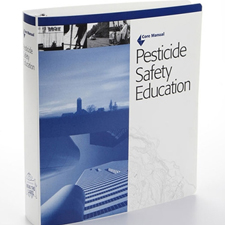
Anyone in the state of Vermont who uses, supervises, recommends, or
sells pesticides and/or trains Worker Protection Standard
handlers/workers may be required to take and pass the CORE exam and all
appropriate category exams to become certified. Certification is
administered by the Vermont Agency of Agriculture, Food & Markets to
ensure that pesticides are used in a proper and legal manner.
- This course is for anyone wishing a Vermont pesticide applicator license: nursery employees, landscapers, farmers, agricultural employers (WPS compliance), garden center employees, pest control operators, government or municipal employees, university employees, etc.
- This course is not intended as a substitute for study of the CORE manual and inserts.
- This course does not provide recertification credit. Please see related Vermont Pesticide Safety Education course offerings for recertification credits.
For more information please contact Sarah Kingsley-Richards at sarah.kingsley@uvm.edu.
Presented by University of Vermont Extension Pesticide Safety Education Program and the Vermont Agency of Agriculture, Food & Markets. [Published 2018]
NOTE: Anyone using the Northeast CORE Manual, 3rd Edition, for other state pesticide applicator certification may also use this review. Vermont-specific laws and regulations do not apply to other state certification; Vermont-specific information may be skipped over in this review. Please check with your state certifying agency for local laws, regulations, and additional required study materials.
The fee for this course is $40. To purchase and enroll in this course, click the following link:
- Teacher: Sarah Kingsley-Richards
As a result of taking this course, participants will learn about Vermont’s Required Agricultural Practices (RAPs), how to take a soil sample and interpret results, how to take a manure sample and interpret results, field by field nutrient management planning, record-keeping requirements, and how to calibrate manure spreaders. This course includes videos, resources, references, and worksheets.
For more information or to enroll contact: Lindsey Ruhl, University of Vermont Extension, lindsey.ruhl@uvm.edu.
This course has been made possible with generous funding from the Vermont Agency of Agricultural Food and Markets Clean Water Initiative Grant, "Innovative Training Tools to Help Small Farm Operations Comply with Required Agricultural Practices," grant #02200-ARM-CWF-2017-UVM.
- Teacher: Lindsey Ruhl
Washington State 4-H Volunteer Orientation is an online course designed to orient new 4-H volunteers. Participants will learn:
- Volunteer Roles & Relationships
- Positive Youth Development
- Youth/Adult Partnerships
- Safe & Inclusive Environments
- Learn by Doing
For more information contact Jana S. Ferris, Washington State University, ferrisj@wsu.edu
- Teacher: Jana Ferris
The audience for this course is:
Washington State 4-H Club Leaders
Washington State 4-H Club Treasurers
- Teacher: Jana Ferris
- Teacher: Jana Ferris
The audience for this course is: Crop producers, handlers, and anyone interested in food safety
By taking this course, students will learn:
Basic microbiology concepts, where pathogens come from and be able to explain where pathogens can be found and how they can contaminate fresh produce.
For more information or to enroll please contact:
- Teacher: Paul Goeringer
- Teacher: Jill Goedeken
The audience for this course is:
By taking this course, students will learn:
For more information or to enroll please contact:
- Teacher: Jana Ferris