
Extension Foundation Online Campus
Irrigation
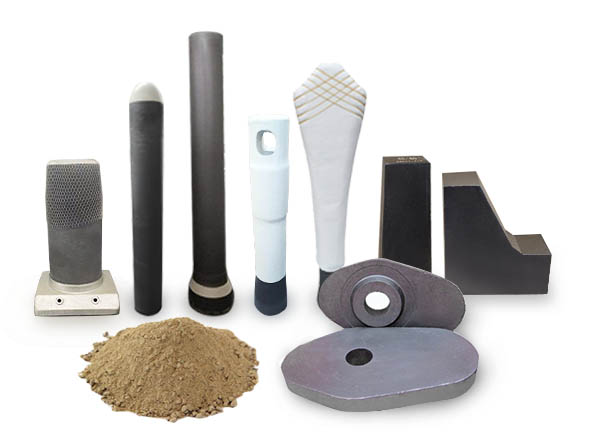
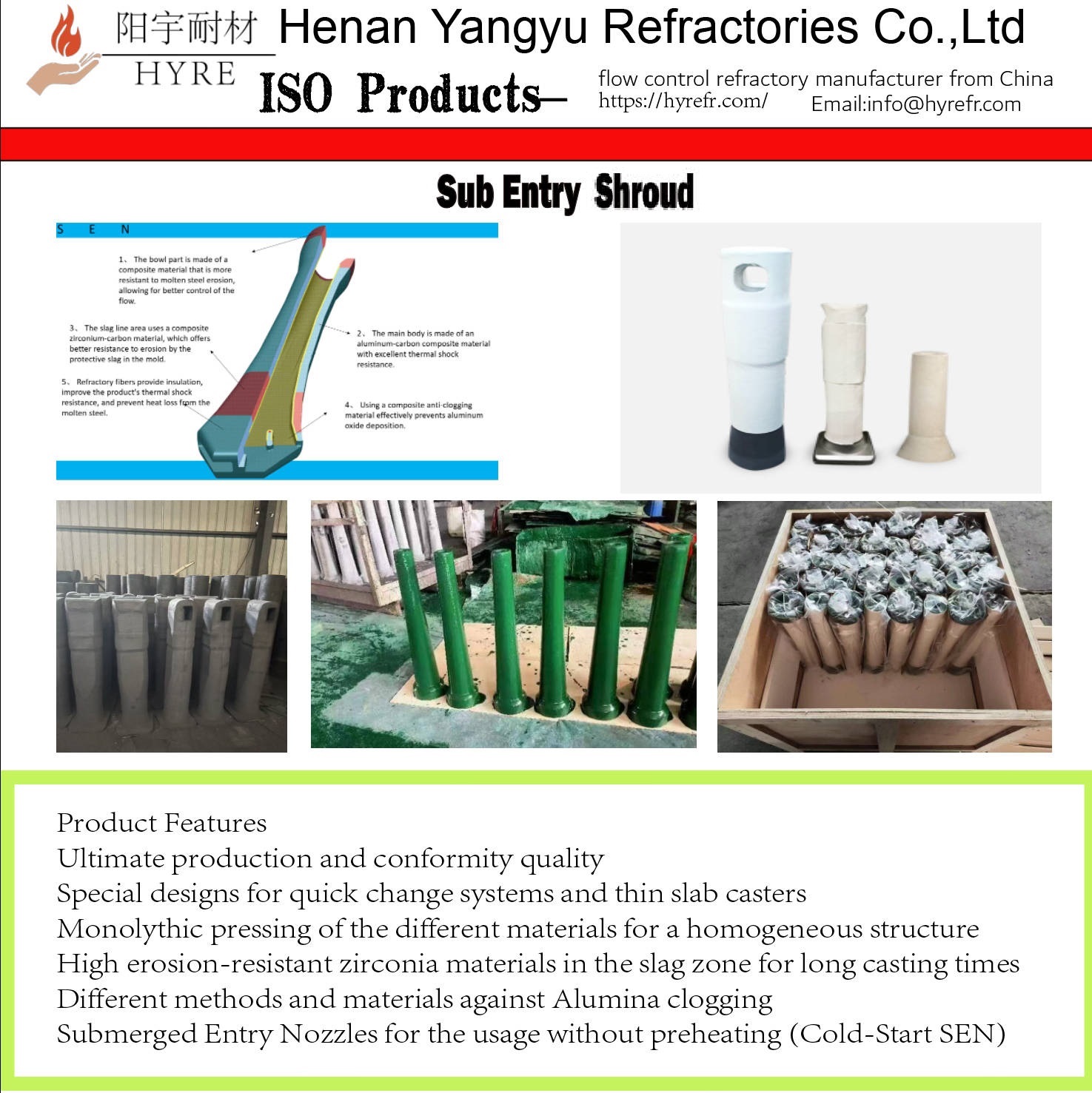
the ladle shroud nozzle for continuous casting is also called the protective sleeve. It is an important component connecting the ladle and the tundish. It is connected to the lower shroud of the sliding shroud device at the bottom of the ladle, and the lower end extends into the tundish.
How to Fix a Sub-Entry Shroud in Continuous Casting Operations : junhuamachineryのblog
Problems of Slide Gate Plates in Steelmaking: blog: junhua
Composition of Tundish Metering Nozzle: Materials, Structure, and...
The shroud is an important functional refractory material for maintaining casting and improving steel quality. The length of the shroud is generally 600-1800mm, the pipe diameter is 90-150 mm, and the structure of the ladle shroud nozzle is shown in Figure 2. Its use conditions are harsh and must have the following functions: excellent thermal shock resistance; good mechanical strength; excellent resistance to alternating corrosion of molten steel and slag, high oxidation resistance, and in addition, other suitable properties are required for some special steel grades.more information,please check here
Slide Gate Plate is a critical component in the continuous casting process, used to control the flow of molten steel from the ladle or tundish to the crystallizer. The following is a detailed description:
Role and Function
· Flow Control: The sliding gate plate adjusts the opening size of the nozzle through the sliding mechanism, thereby controlling the flow of molten steel. This is very important for maintaining a constant and controllable casting process.
· Operational Flexibility: The sliding gate plate allows operators to adjust the molten steel flow rate as needed during the casting process to adapt to different production requirements and conditions.
· Emergency Stop: In an emergency, the sliding gate plate can completely close the flow channel and stop the flow of molten steel, thereby preventing accidents and losses.
Slide gate plate for Converter
The slide gate plate is made of sintered corundum, fused corundum, fused zirconium corundum, zirconium mullite and other main raw materials. It is combined with new resin, formed by high pressure and fired at high temperature. It has the advantages of high strength, super hard, high temperature resistance and corrosion resistance, and strong thermal stability.
how the sub entry nozzle works - 50e2672b 的部落格 - udn部落格
Monoblock Stopper is used mainly for flow control on Molten Steel poured from tundish to mould. Monolithic Stopper is installed in the Tundish above the Sub Entry Nozzle and the gap between stopper head and Nozzle decide the throughput requirement of Molten Steel inside the Mould.
Argon can be blown into the tundish through argon inlet to prevent nozzle from Clogging ( specially designed feature wherever it is required we design and customise accordingly)
SPECIAL FEATURES:
o Facility for gas purging
o Anti oxidant properties
o Design and size as per customer’s requirement
o Clogging free casting for long sequence of casting
o Gas purging facilities to prevent alumina clogging (optional)
o Slag zone immersed part re-inforcement with special material for long life
o Argon sealing purging arrangement can be provided on customer’s request
o Wide range of formulation for withstanding oxidation and long sequence casting
o Different assembly methods for assured security even in long sequence casting
o We manufacture Silica free Oxy-bore ladle shroud for less corrosion and long sequence casting
Recycling slide gate plates to save costs and reduce waste
The top 5 ladle shroud manufacturers in China
Production and application of isostatically pressed refractory materials
Monoblock Stopper is used mainly for flow control on Molten Steel poured from tundish to mould. Monolithic Stopper is installed in the Tundish above the Sub Entry Nozzle and the gap between stopper head and Nozzle decide the throughput requirement of Molten Steel inside the Mould.
In modern continuous casting operations, the ladle shroud plays a critical role in ensuring smooth steel flow, minimizing re-oxidation, and stabilizing casting quality. As global steel plants increasingly rely on China for high-quality refractory components, choosing a reliable ladle shroud supplier from China has become a key factor that directly affects safety, casting stability, product quality, and overall cost efficiency.
Types of Sub-Entry Shrouds You Should Know in Continuous Casting |...
Influence of Submerged Entry Shroud Offset on the Flow Field
Henan Yangyu Refractores Co.,Ltd
junhuamachinery.hatenablog.com
chojnow.pl - Problems of Slide Gate Plates in SteelmakingHow to Fix a Sub-Entry Shroud in Continuous Casting Operations
Types of Sub-Entry Shrouds You Should Know in Continuous Casting |...
Composition of Tundish Metering Nozzle: Materials, Structure, and...
However, China has hundreds of refractory manufacturers, and the quality varies dramatically—from world-class exporters to small workshops. Selecting the right supplier requires a systematic evaluation, technical understanding, and due diligence.
This article provides a detailed, practical, and highly technical guide on how to find a goodladle shroud supplier from China, covering quality indicators, manufacturing capabilities, materials, inspection standards, pricing logic, delivery systems, and supplier verification.
Types of Sub-Entry Shrouds You Should Know in Continuous Casting |...
The Unseen Champion Of Continuous Steel Casting-Slide Gate
5 Key Factors Behind Ladle Shroud Cracking
How To Choose Ladle Shroud From A China Factory
A Few Things You Should Know About The Ladle Nozzle
Wear Reason About The Slide Gate Plate
Before Enquiry Some Questions You Should Know About Ladle Shroud - Henan Yangyu Refractories Co.,Ltd
The Iso Refractory Trial Report Compared With Vesuvius
The drawing regarding kinds of slide gate plate
Slide Gate Plate Price Guide 2025: Complete Pricing Analysis and Buying Tips
Complete Guide to Submerged Entry Nozzle (SEN) in Steel Making
What Is A Ladle Shroud And Its Function - Henan Yangyu Refractories Co.,Ltd
How To Improve The Lifespan Of Slide Gate Plates
The Reason Of Sub Entry Nozzle Clogging And How To Slove It
Why The Tundish Stopper Cracks And How To Improve It
How To Avoid The Sub Entry Nozzle(SEN) Clogging
The Problem In The Application Of Monoblock Stopper Rods
Courses tagged with "Irrigation"
The audience for this course is: Crop producers, handlers, and anyone interested in food safety
By taking this course, students will learn:
Basic microbiology concepts, where pathogens come from and be able to explain where pathogens can be found and how they can contaminate fresh produce.
For more information or to enroll please contact:
- Teacher: Paul Goeringer
Summary: Irrigation is defined as the watering of land (or other plant growth media) by artificial means to foster plant growth. This can be very costly and the availability of supplemental water may be scarce, so it is important to be able to calculate accurately how much water to apply and when. This lesson will introduce you the underlying concepts you will need to consider.
After completing this lesson, you will be able to:
- Explain how the systems approach can be used to manage water in irrigated systems.
- Identify the fluxes (flows) of water and energy in an irrigated soil-plant-atmosphere system.
- Describe how the Irrigator’s Equation can be used to quantify the four (4) major variables involved in managing irrigation systems.
- Use the principle of conservation of mass to determine the water budget (also called water balance) of a soil-plant-atmosphere (SPA) system.
- Use the principle of conservation of energy to determine the energy budget (also called energy balance) of a SPA system.
Time Required: We estimate it will take you 2 hours in total to complete the lesson. You can work on it at your own pace and do not have to complete it in one setting.
Who Would Benefit: A variety of people will find this upskilling course useful from adults to high school students. This includes careers (or hobbyists) growing plants (ie field crops, greenhouse production, turf and lawns, gardens, etc.) and wishing to save money and water by better timing irrigation applications.
Upskill Credentials: If you finish the entire course including passing a final quiz (which you can take up to 3 times), then you will earn a badge certificate of completion. This has also been approved for 2 Soil and Water Management CEUs through the national Certified Crop Adviser program.
Instructor: Dr. Allan A. Andales is a Professor and Extension Specialist of Irrigation and Water Science in the Department of Soil and Crop Sciences, Colorado State University (CSU). He has a joint appointment in the Department of Civil and Environmental Engineering. Dr. Andales applies principles of soil and water engineering, environmental biophysics, and numerical methods to study the effects of management practices and environmental factors on field hydrology and agricultural production. Experimental data are used to develop computer models and decision support tools that can improve agricultural water use efficiency and water quality. He is a member of the CSU Extension Water Resource Management Team that engages the public in addressing agricultural and urban water issues in Colorado.
ADA Accessibility: We have done our best to follow ADA best practices. Let us know if you run into any problems or require further accommodations.
Acknowledgements: This online micro-credential upskilling course is offered through the CSU Ag Upskilling program. Development was supported in part by funding from the CHS Foundation, administered by Colorado State University (2022). The CHS Foundation, funded by charitable gifts from CHS Inc., is focused on developing a new generation of agriculture leaders for life-long success. Together, with our partners, we are igniting innovation and driving excellence in agriculture education, cultivating high impact programs for rural youth and accelerating potential for careers in agriculture. Learn more at CHS Foundation.


- Teacher: Allan Andales
- Teacher: Tamla Blunt
- Teacher: Deana Namuth-Covert
Summary: The goal of irrigation is to add water to the soil where the plant roots are actively growing (the root zone). The soil serves as a water reservoir, from which plants can withdraw water needed for growth. In irrigation management, it is necessary to know the characteristics of the soil in the area that you will be irrigating. These soil characteristics can be used to determine the amount of water in the root zone that is available to the plants.
After completing this lesson, you will be able to:
- Describe the concept of depth of water.
- Determine the depth of water that is available to the plants.
- Use the concept of depth of water to estimate the net irrigation requirement (i.e., soil water deficit) of the soil root zone.
Time Required: We estimate it will take you 2 hours in total to complete the lesson. You can work on it at your own pace and do not have to complete it in one setting.
Who Would Benefit: A variety of people will find this upskilling course useful from adults to high school students. This includes careers (or hobbyists) growing plants (ie field crops, greenhouse production, turf and lawns, gardens, etc.) and wishing to save money and water by better timing irrigation applications.
Upskill Credentials: If you finish the entire course including passing a final quiz (which you can take up to 3 times), then you will earn a badge certificate of completion. It has been approved for 2 Soil and Water Management CEUs through the national Certified Crop Adviser program.
Instructor: Dr. Allan A. Andales is a Professor and Extension Specialist of Irrigation and Water Science in the Department of Soil and Crop Sciences, Colorado State University (CSU). He has a joint appointment in the Department of Civil and Environmental Engineering. Dr. Andales applies principles of soil and water engineering, environmental biophysics, and numerical methods to study the effects of management practices and environmental factors on field hydrology and agricultural production. Experimental data are used to develop computer models and decision support tools that can improve agricultural water use efficiency and water quality. He is a member of the CSU Extension Water Resource Management Team that engages the public in addressing agricultural and urban water issues in Colorado.
ADA Accessibility: We have done our best to follow ADA best practices. Let us know if you run into any problems or require further accommodations.
Acknowledgements: This online micro-credential upskilling course is offered through the CSU Ag Upskilling program. Development was supported in part by funding from the CHS Foundation, administered by Colorado State University (2022). The CHS Foundation, funded by charitable gifts from CHS Inc., is focused on developing a new generation of agriculture leaders for life-long success. Together, with our partners, we are igniting innovation and driving excellence in agriculture education, cultivating high impact programs for rural youth and accelerating potential for careers in agriculture. Learn more at CHS Foundation.
- Teacher: Allan Andales
- Teacher: Deana Namuth-Covert
Summary: To effectively utilize limited irrigation resources in the most cost-effective manner requires balancing the inputs and outputs of water fluxes, as well as water that is stored in the soil profile. Best irrigation management scheduling practices focus on water balance in the rootzone because that is where the plant/crop is extracting water (and nutrients) from the soil. It is here we estimate the irrigation water requirements to maintain healthy plants. Decisions on when and how much irrigation water to apply depends on the soil water deficit and the management-allowed depletion (MAD). This lesson will walk you through each of these concepts including real world problem scenarios.
After completing this lesson, you will be able to:
- Use the water balance of the root zone to estimate the irrigation water requirement.
- Make irrigation decisions by comparing the soil water deficit to the management-allowed depletion.
Time Required: We estimate it will take you 2 hours in total to complete the lesson. You can work on it at your own pace and do not have to complete it in one setting.
Who Would Benefit: A variety of people will find this upskilling course useful from adults to high school students. This includes careers (or hobbyists) growing plants (ie field crops, greenhouse production, turf and lawns, gardens, etc.) and wishing to save money and water by better timing irrigation applications.
Upskill Credentials: If you finish the entire course including passing a final quiz (which you can take up to 3 times), then you will earn a badge certificate of completion. This has also been approved for 2 Soil and Water Management CEUs through the national Certified Crop Adviser program.
Instructor: Dr. Allan A. Andales is a Professor and Extension Specialist of Irrigation and Water Science in the Department of Soil and Crop Sciences, Colorado State University (CSU). He has a joint appointment in the Department of Civil and Environmental Engineering. Dr. Andales applies principles of soil and water engineering, environmental biophysics, and numerical methods to study the effects of management practices and environmental factors on field hydrology and agricultural production. Experimental data are used to develop computer models and decision support tools that can improve agricultural water use efficiency and water quality. He is a member of the CSU Extension Water Resource Management Team that engages the public in addressing agricultural and urban water issues in Colorado.
ADA Accessibility: We have done our best to follow ADA best practices. Let us know if you run into any problems or require further accommodations.
Acknowledgements: This online micro-credential upskilling course is offered through the CSU Ag Upskilling program. Development was supported in part by funding from the CHS Foundation, administered by Colorado State University (2022). The CHS Foundation, funded by charitable gifts from CHS Inc., is focused on developing a new generation of agriculture leaders for life-long success. Together, with our partners, we are igniting innovation and driving excellence in agriculture education, cultivating high impact programs for rural youth and accelerating potential for careers in agriculture. Learn more at CHS Foundation.
- Teacher: Allan Andales
- Teacher: Deana Namuth-Covert
Summary: When making decisions about when to irrigate a crop, no matter the specific plant or scenario, it is important to take into consideration evapotranspiration rates which provide an estimate of water flux out of your system. The challenge is that evapotranspiration varies a lot depending on the specific plant, its growth stage plus changing weather (or greenhouse) conditions. Precision agriculture scientists have been able to characterize two reference crop values as a way to standardize evapotranspiration calculations based on weather data. In this lesson you will learn what is meant by a reference crop, crop coefficient, and water stress coefficient and how you can use these to inform your irrigation management decisions.
Time Required: We estimate it will take you 2 hours to complete the lesson. You can work on it at your own pace and do not have to complete it in one setting.
Who Would Benefit: A variety of people will find this upskilling course useful from adults to high school students. This includes careers (or hobbyists) growing plants (ie field crops, greenhouse production, turf and lawns, gardens, etc.) and wishing to save money and water by better timing irrigation applications.
Upskill Credentials: If you finish the entire course including passing a final quiz (which you can take up to 3 times), then you will earn a badge certificate of completion. It has been approved for 2 Soil and Water Management CEUs through the national Certified Crop Adviser program.
Instructor: Dr. Allan A. Andales is a Professor and Extension Specialist of Irrigation and Water Science in the Department of Soil and Crop Sciences, Colorado State University (CSU). He has a joint appointment in the Department of Civil and Environmental Engineering. Dr. Andales applies principles of soil and water engineering, environmental biophysics, and numerical methods to study the effects of management practices and environmental factors on field hydrology and agricultural production. Experimental data are used to develop computer models and decision support tools that can improve agricultural water use efficiency and water quality. He is a member of the CSU Extension Water Resource Management Team that engages the public in addressing agricultural and urban water issues in Colorado.
ADA Accessibility: We have done our best to follow ADA best practices. Let us know if you run into any problems or require further accommodations.
Acknowledgements: This online micro-credential upskilling course is offered through the CSU Ag Upskilling program. Development was supported in part by funding from the CHS Foundation, administered by Colorado State University (2022). The CHS Foundation, funded by charitable gifts from CHS Inc., is focused on developing a new generation of agriculture leaders for life-long success. Together, with our partners, we are igniting innovation and driving excellence in agriculture education, cultivating high impact programs for rural youth and accelerating potential for careers in agriculture. Learn more at CHS Foundation.


- Teacher: Allan Andales
- Teacher: Deana Namuth-Covert
Summary: No matter the particular plant scenario you are working with (ie field crop, pastureland, Greenhouse business, turf grass, home garden and landscaping, etc.) being able to accurately estimate the water needs and timing of irrigation will help lower costs, as well as preserve limited water supplies. In this lesson you will learn how to use a specific irrigation app which has been developed by a group of public researchers and is free for your use. This app, along with the foundational irrigation principles you learned in previous lessons and/or from your previous knowledge will help you maximize the effects of your irrigation applications while minimizing costs. This lesson uses a Colorado field example.
After completing this lesson, you will be able to:
- Set up a field in the Water Irrigation Scheduler for Efficient Application (WISE) App to schedule irrigations during one growing season.
- Input irrigation amounts in WISE based on estimated soil water deficits (D) and the crop’s management allowed depletion (MAD) during one growing season.
- Interpret the WISE water balance outputs.
Time Required: We estimate it will take you 2 hours to complete the lesson. You can work on it at your own pace and do not have to complete it in one setting.
Who Would Benefit: A variety of people will find this upskilling course useful from adults to high school students. This includes careers (or hobbyists) growing plants (ie field crops, greenhouse production, turf and lawns, gardens, etc.) and wishing to save money and water by better timing irrigation applications.
Upskill Credentials: If you finish the entire course including passing a final quiz (which you can take up to 3 times), then you will earn a badge certificate of completion. It has been approved for 2 Crop Management CEUs through the national Certified Crop Adviser program.
Instructor: Dr. Allan A. Andales is a Professor and Extension Specialist of Irrigation and Water Science in the Department of Soil and Crop Sciences, Colorado State University (CSU). He has a joint appointment in the Department of Civil and Environmental Engineering. Dr. Andales applies principles of soil and water engineering, environmental biophysics, and numerical methods to study the effects of management practices and environmental factors on field hydrology and agricultural production. Experimental data are used to develop computer models and decision support tools that can improve agricultural water use efficiency and water quality. He is a member of the CSU Extension Water Resource Management Team that engages the public in addressing agricultural and urban water issues in Colorado.
ADA Accessibility: We have done our best to follow ADA best practices. Let us know if you run into any problems or require further accommodations.
Acknowledgements: This online micro-credential upskilling course is offered through the CSU Ag Upskilling program. Development was supported in part by funding from the CHS Foundation, administered by Colorado State University (2022). The CHS Foundation, funded by charitable gifts from CHS Inc., is focused on developing a new generation of agriculture leaders for life-long success. Together, with our partners, we are igniting innovation and driving excellence in agriculture education, cultivating high impact programs for rural youth and accelerating potential for careers in agriculture. Learn more at CHS Foundation.


- Teacher: Allan Andales
- Teacher: Deana Namuth-Covert