
Extension Foundation Online Campus
Participatory Research Tools
Choosing and Installing a VPN App Across Different Devices
Installing a VPN is no longer limited to desktop computers. The same service may be needed on a phone during travel, a laptop on public Wi-Fi, or a smart TV at home. This makes platform compatibility an important consideration before installation. It is also useful to understand how account access works across devices and which privacy controls are available once the application is running.
Choose the Version That Matches the Device
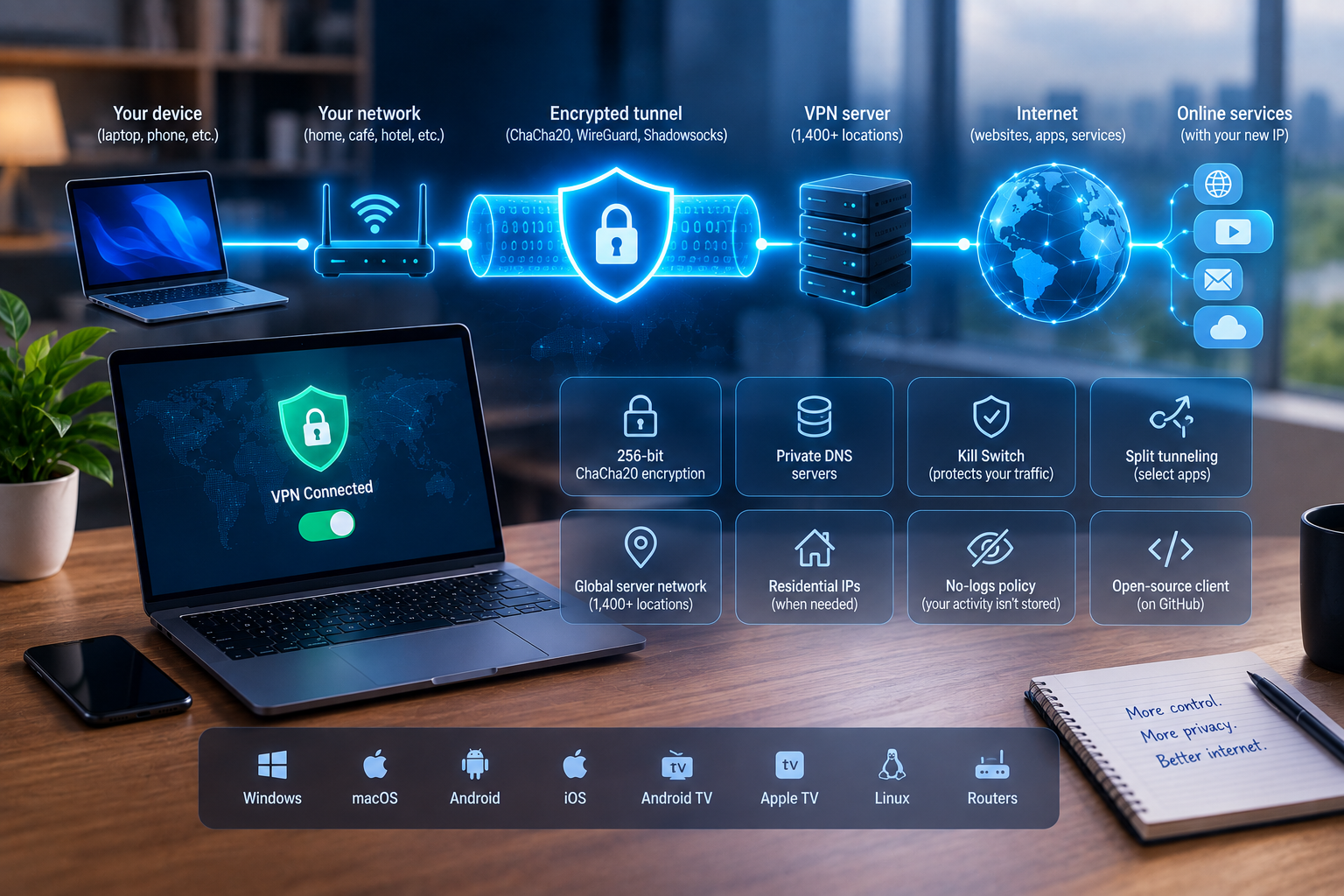
The application is available for Windows, Mac, iOS, Android, Android TV, and Apple TV. These native versions cover common computers, smartphones, tablets, and television platforms. A Linux version is listed as planned rather than currently available.
A VPN app download can be obtained from the website or, for supported mobile devices, through Google Play and the Apple App Store. The download itself is free, while use of the Premium service is connected with a subscription. New users are also offered a 7-day trial with access to Premium features.
Choosing the correct platform version is preferable to trying to adapt software designed for another operating system. Native applications are built around the controls and installation methods of their respective devices.
Account Access Works Across Multiple Platforms
Before using the VPN, an account needs to be created. Login is handled with a unique Security Code, which is delivered by email and also displayed during registration.
The same account can be used on different supported devices. A single subscription allows up to 10 simultaneous connections, so installing the application on a laptop does not prevent it from also being used on a phone, tablet, or compatible TV device.
This arrangement can simplify multi-device setups. Instead of creating a separate VPN account for every piece of equipment, users can sign in with the same account credentials wherever the supported application is installed.
Installation Is Only the First Part of Setup
After the application has been installed and the user has signed in, the next step is establishing a VPN connection. The service supports both automatic and manual region selection, allowing the application to choose a location or letting the user select one.
Two connection protocols are listed: WireGuard and Shadowsocks, with ChaCha20 used for encryption. These technical components operate behind the application interface and determine how traffic is carried through the VPN connection.
The service does not impose a stated bandwidth limit. This can be relevant when the same VPN is used for activities with different traffic requirements, from ordinary browsing to video and calls.
Privacy Controls Can Change How Apps Connect
Several settings influence what happens after the VPN has been installed. Kill Switch is designed to block internet access if the VPN connection unexpectedly stops, reducing the chance that traffic continues through the normal connection.
Split Tunneling serves a different purpose. It allows users to decide which applications should use the VPN and which should connect outside it. This is useful when only part of the device's traffic needs VPN routing.
DNS and IP leak prevention are included as additional connection protections. There is also a built-in Ad Blocker, which addresses advertising and tracking separately from the encrypted VPN tunnel.
TV Apps Extend VPN Use Beyond Computers and Phones
Support for Android TV and Apple TV means the application can also be installed directly on compatible television platforms. This is different from relying exclusively on a VPN connection running on a phone or computer.
For households using several device types, television support can be considered alongside the 10-device simultaneous connection allowance. Family Sharing is also available for up to five additional people, although each shared user can use one device at a time.
These options make device planning relevant before installation. Counting the phones, computers, tablets, and TV devices that may need access helps determine how the available connection allowance will be used.
Keep Installation and Account Details Together
Downloading the correct application is only one part of setting up a VPN across several devices. Account credentials, supported operating systems, server selection, and connection settings all influence how the installation works afterward.
The Security Code is particularly important because it provides access when signing in on another device. Keeping account information available makes it easier to add supported equipment later without creating a new subscription.
A practical installation therefore begins by checking platform compatibility and continues with account access and configuration. Once those elements are understood, features such as Split Tunneling, Kill Switch, leak prevention, and multi-device connections can be configured according to the way each device is actually used.