Extension Foundation Online Campus
Ipm
One effective way to ensure steroid quality when buying online is by following a simple checklist focused on three major factors: independent lab verification, packaging integrity, and a seller’s past reviews. The best sellers allow buyers to request or easily access recent lab tests for the specific batches, which confirm the product is what it claims to be without contaminants. Carefully inspecting packaging, including seals and labels, and comparing them to verified photos from trusted buyers can reveal discrepancies that indicate poor quality. Seller reviews help you understand their track record and whether they consistently deliver authentic products. I found it very helpful to check this page for guidance because it explains why ignoring any of these steps reduces your chances of getting quality steroids. Awareness of common red flags like extremely low prices or last-minute offers also protects you from risky purchases. Combining these strategies provides practical reassurance and improves the odds of safe steroid buying.
Courses tagged with "Ipm"
Course Access Update: Accessibility Improvements in Progress
To support updated digital accessibility requirements taking effect April 24, 2026, the UC Master Gardener Program Statewide Office is updating select statewide eLearning courses and their associated training toolkits. As part of this process, access to select courses will be temporarily unavailable beginning April 23, 2026. These updates will help ensure course content aligns with current accessibility standards (including WCAG 2.1 AA) and supports all learners.
We are actively enhancing these courses and will release updated versions as improvements are completed. If you need access to course materials during this time, please contact: mgtraining@ucanr.edu
Thank you for your patience.
Course overview
The pink hibiscus mealybug (Maconellicoccus hirsutus) is an invasive insect that is currently in California and has the potential to have a profound impact on our agriculture and natural environment. A key to slowing the spread of pink hibiscus mealybug is early detection and rapid response, which requires education of citizens and resource professionals. This course explores the pest's lifecycle, how they feed, travel and what to do if you see it in California.
Who should enroll?
Residents of California, Master Gardeners, Arborists, Nursery Professionals, and other stakeholders.
How to enroll
Continuing Education Units
- UC Master Gardeners are eligible for 1 hour of continuing education (CE) for completing this course.
Need Help?
- For assistance with login, course enrollment, contact campushelp@extension.org
- For assistance with progress through the course or certificate, contact mgtraining@ucanr.edu
The California Department of Agriculture and the University of California Master Gardener Program.
Teacher
Lauren Snowden, UC Master Gardener Online Training Specialist


The University of California Division of Agriculture & Natural Resources (UCANR) is an equal opportunity provider. (Complete nondiscrimination policy statement can be found at (pdf, opens in another window) http://ucanr.edu/sites/anrstaff/files/215244.pdf)
Inquiries regarding ANR’s nondiscrimination policies may be directed to UCANR, Affirmative Action Compliance Officer, University of California, Agriculture and Natural Resources, 2801 Second Street, Davis, CA 95618, (530) 750-1343.
_______
The material and information presented here are for general education and information purposes only and do not constitute technical advice relating to individual and site-specific issues. Reach out to the University of California (UC) Cooperative Extension office in your county for unbiased, research-based solutions. Any reference to commercial products, companies, and organizations does not imply an endorsement by The Regents of the UC.
- Teacher: UC Master Gardener Online Training Support
- Teacher: Lauren Snowden
Course Access Update: Accessibility Improvements in Progress
To support updated digital accessibility requirements taking effect April 24, 2026, the UC Master Gardener Program Statewide Office is updating select statewide eLearning courses and their associated training toolkits. As part of this process, access to select courses will be temporarily unavailable beginning April 23, 2026. These updates will help ensure course content aligns with current accessibility standards (including WCAG 2.1 AA) and supports all learners.
We are actively enhancing these courses and will release updated versions as improvements are completed. If you need access to course materials during this time, please contact: mgtraining@ucanr.edu
Thank you for your patience.
Course overview
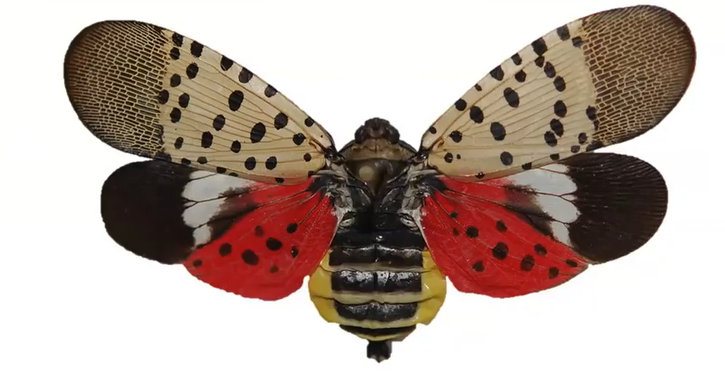
The spotted lanternfly (Lycorma delicatula) is an invasive insect that is currently in the mid-Atlantic United States and has the potential to settle in California and have a profound impact on our agriculture and natural environment. A key to slowing the spread of spotted lanternfly is early detection and rapid response, which requires education of citizens and resource professionals. This course explores the pest's lifecycle, how they feed, travel and what to do if you see it in California.
Who should enroll?
Residents of California, Master Gardeners, Arborists, Nursery Professionals, and other stakeholders.
How to enroll
Continuing Education Units
- UC Master Gardeners are eligible for 1 hour of continuing education (CE) for completing this course.
- International Society of Arboriculture (ISA) (1.0 for ISA Certified Arborists, 1.0 Utility Specialist, 1.0 Municipal Specialist, 1.0 Climber Specialist, 1.0 Aerial Lift Specialist). To get the ISA Continuing Education Units certificate you will be charged a fee of $30.
Need Help?
- For assistance with login, course enrollment, contact campushelp@extension.org
- For assistance with progress through the course or certificate, contact mgtraining@ucanr.edu
The California Department of Agriculture and the University of California Master Gardener Program.
Teacher
Lauren Snowden, UC Master Gardener Online Training Specialist